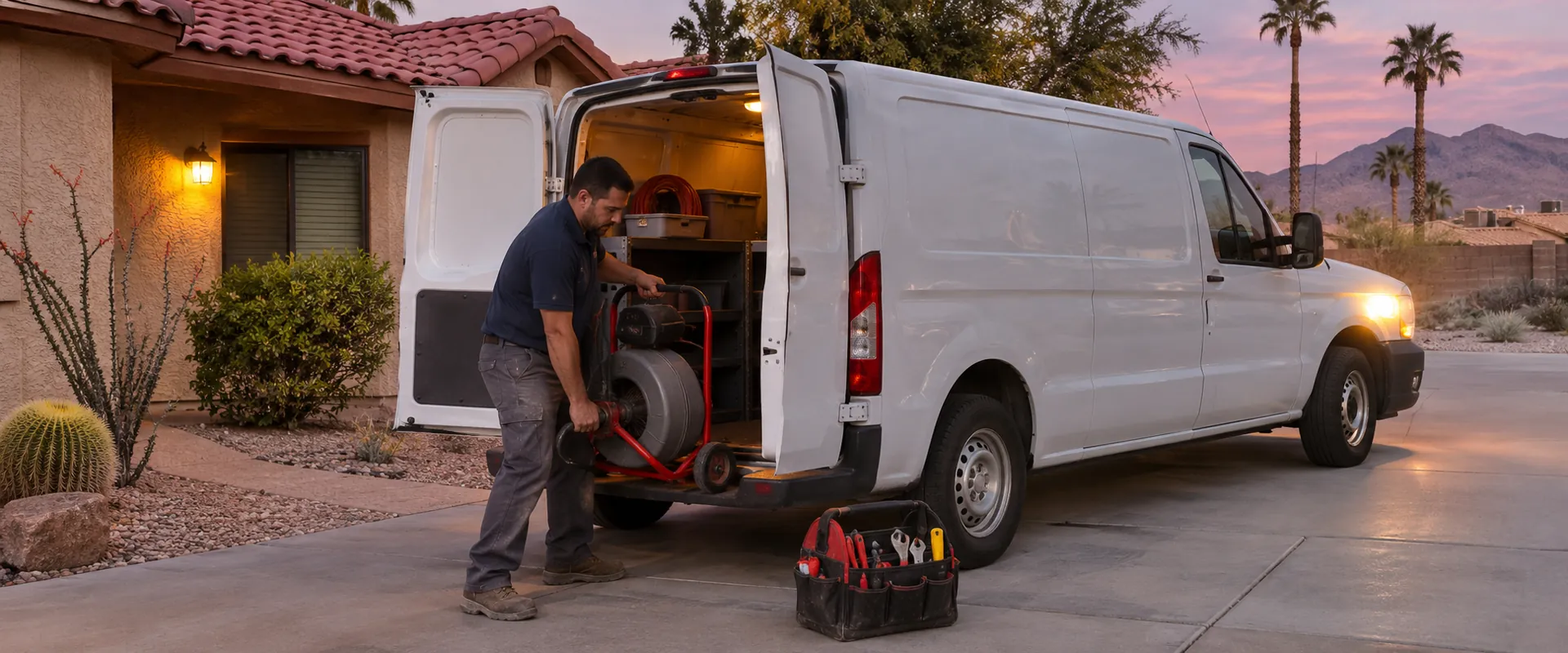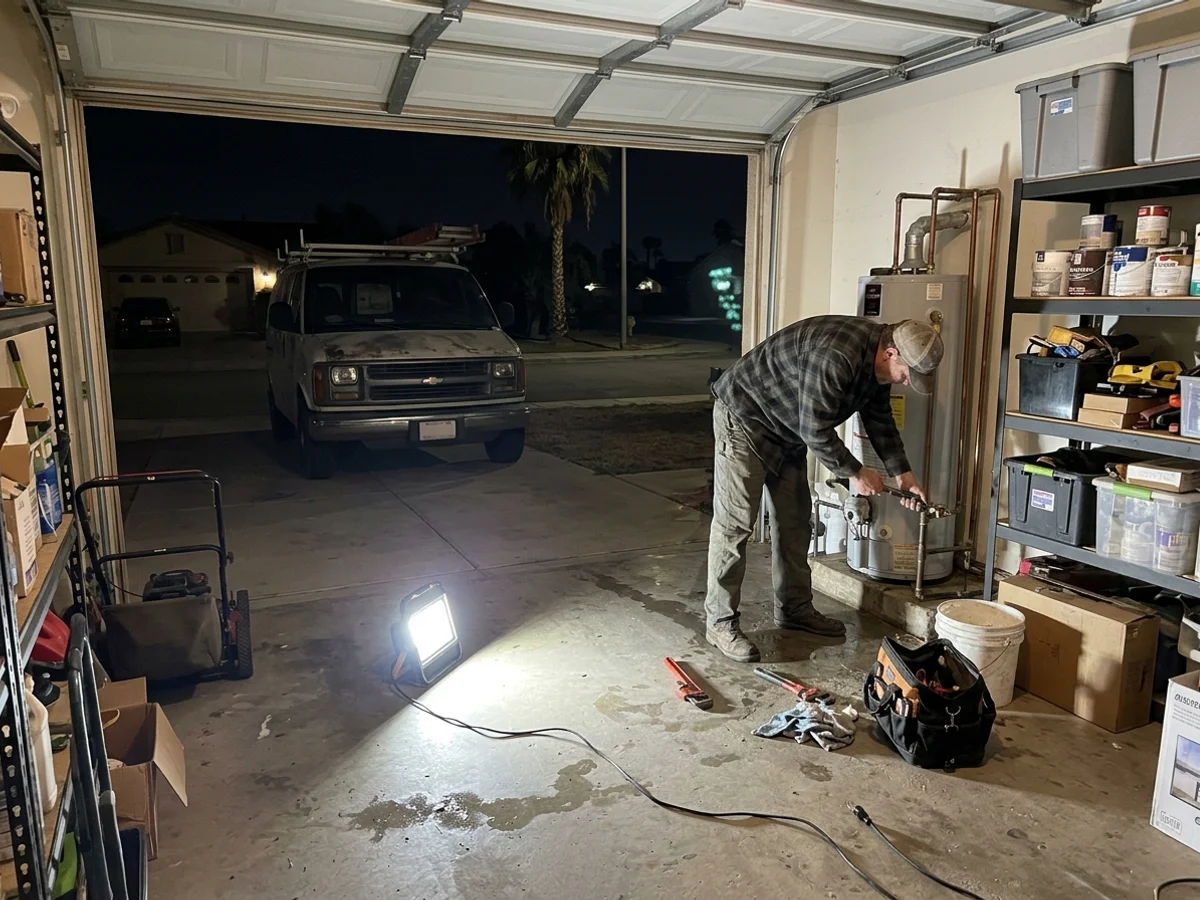
A supply line splits in the garage after a 28 degree night. The water heater gives out on a Sunday afternoon. A monsoon cell drops an inch of rain in forty minutes and the floor drain starts pushing water back into the house. Plumbing emergencies do not keep office hours, and the worst part is usually the first few minutes, when you are standing in water and nobody picks up the phone.
That gap is what this line closes. When you need an emergency plumber in Sierra Vista, your call is answered at any hour by an automated bilingual assistant, in English or Spanish. It writes down what is happening, where it is happening, and whether the water is off, then routes those details to a local plumber. There is no voicemail box and no message waiting until Monday. Sierra Vista Plumber Pros is built around one simple idea: your call gets answered, in your language, anywhere in the service area.
When an Overnight Freeze Splits a Pipe
Days here are mild for most of the year, which is exactly why freezes catch people off guard. At roughly 4,600 feet, January nights average somewhere around 30 to 34 degrees. The cold rarely lasts, but a few hours below freezing is enough to crack a hose bib, a backflow preventer on the irrigation line, or a supply pipe running through an uninsulated garage or crawl space.
The timing is what fools people. Ice inside the pipe plugs the split, so nothing leaks overnight. Then the sun comes up, the ice thaws, and the crack starts spraying mid-morning, often in a wall cavity or a garage where nobody is watching.
- Exterior hose bibs and irrigation backflow assemblies take the most damage because they sit fully exposed.
- Garage and crawl space lines freeze long before anything inside the heated part of the house.
- Older galvanized supply pipe, common in the historic homes of Bisbee and Tombstone, has often thinned from corrosion and splits more easily.
If you find one burst pipe after a cold night, check the rest of that exposed run. And if a line is frozen but not yet leaking, close the main before it thaws. That single step can turn a flooded garage into a straightforward repair.
Shut It Off, Make It Safe, Drain the Lines
Most of the damage in a plumbing emergency comes down to how long water keeps running. A broken half-inch line at full pressure can move several gallons a minute, so what you do before the plumber arrives matters more than anything else.
- Find the main shutoff. Check near the front hose bib, in the garage where the supply line comes in, or at the meter box by the street. Manufactured homes often have a valve underneath near the supply riser.
- Close it without forcing it. A ball valve takes a quarter turn so the handle sits across the pipe. An older gate valve takes several turns clockwise. If it will not move, stop. Scaled gate valves can snap at the stem.
- Cut power near the water. Switch off breakers for outlets, lights, or appliances in the wet area before you walk through it.
- Bleed off the pressure. Open the lowest faucet in the house, often a tub spout or an outdoor spigot, to drain what is left in the pipes.
- Isolate the water heater if it is involved. Close the cold supply valve on top and shut off the gas or the breaker.
Once the water is off, call and say so. A house that is already stable gets handled differently from one that is still flooding, and the plumber loads different equipment for each. Our guide to shutting off your water shows where the valve usually hides.
Tonight or Tomorrow? A Quick Way to Decide
Not every plumbing problem needs a truck at midnight. This table sorts the common ones.
| Situation | Call Now? | Why |
|---|---|---|
| Burst or freeze-split pipe, or a leak you cannot stop | Yes | Water damage grows by the minute |
| Pipe frozen solid after a cold night | Yes, with the main closed | The leak usually starts when it thaws |
| Sewage rising in a tub, shower, or floor drain | Yes | The main line is blocked below every fixture |
| No water at any tap | Yes | A failed valve, regulator, or break on your side |
| Strong sewer gas smell indoors | Yes | Gas is reaching the living space |
| Water heater leaking from the tank | Yes | A failing tank can release its full volume |
| One slow drain, a drip, or a running toilet | Usually not | Safe to book for daytime |
If you are not sure where your problem fits, call anyway. Describing it takes a couple of minutes, and the triage will tell you whether it needs someone tonight.
Other After-Hours Calls That Show Up Often
Monsoon backups. July and August bring close to half the year’s rain, usually in short, heavy storms. That surge can overwhelm yard drains and expose a sewer lateral that was already cracked or partly blocked. If water rises in the lowest drain during or after a storm, stop running water inside the house and call.
Water heater failures. Tap water here comes from deep wells and runs moderately hard to hard. Scale builds on the bottom of tank heaters and shortens their life, so a tank that leaks or a relief valve that discharges nonstop is a regular emergency call.
No water and seized valves. Losing water to the whole house can mean a failed pressure regulator or a break between the meter and the home. It is often discovered at the same moment as a stuck shutoff, which gets replaced with a quarter-turn ball valve so the next shutoff actually works.
Landlords, New Arrivals and Owners Who Are Away
Families arrive and leave on orders all year, so plenty of calls come from people who moved into a house last week and do not have a plumber yet. If that is you, the line works the same as it would for a longtime homeowner. You do not need an account or a history to get routed.
Landlords and property managers see a different version of the same problem. A unit sitting empty between tenants can hide a slow leak, a running toilet, or dry traps that let sewer gas in. When a new tenant reports a problem, call, describe what they are seeing, and give their name and number for access. Owners who are out of town can do the same with a neighbor or manager on site.
Estimates, Fees and Checking a Contractor
You can request a free estimate, and you should ask about any service call or after-hours fee on the phone before you book. It is also fair to ask what will be done first to stop the damage, and whether the permanent repair can be scheduled separately once things are stable. Arizona homeowners can look up any contractor’s status with the Registrar of Contractors at roc.az.gov before work begins.
Emergency calls are routed across Sierra Vista, Huachuca City, Hereford, Bisbee, Whetstone, and Palominas. If water is running right now, close the main first, then call 520-555-0100.