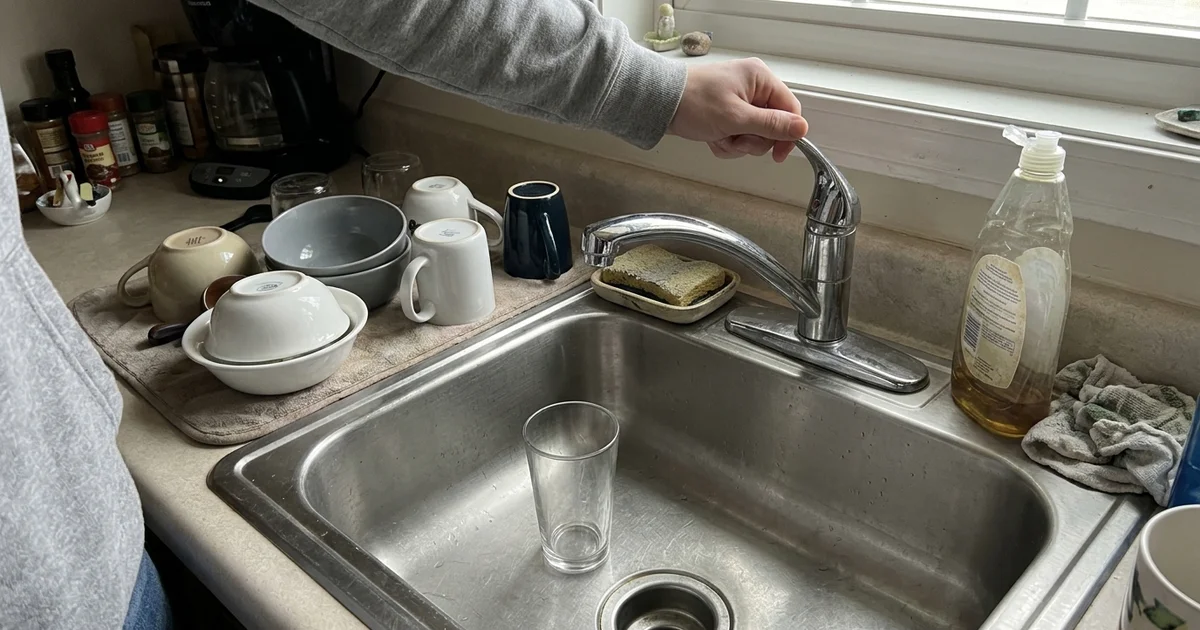
You turn on the tap and nothing comes out. The first fear is usually a burst pipe inside a wall, but a broken pipe gives you water where you do not want it, not a dry faucet. No water at all means something is blocking the flow, and most causes can be narrowed down in a few minutes.
First, check the calendar and the thermometer
If this is a winter morning after a night below freezing, a frozen supply line moves to the top of the list. Sierra Vista sits at about 4,600 feet, and January nights average around 30 to 34 degrees. The cold does not last, but a few hours is enough to freeze a line in an uninsulated garage, a crawl space, or along an exterior wall.
Clues that point to a freeze:
- Some fixtures work and others do not, usually the ones on outside walls.
- The water stopped overnight and the house is otherwise normal.
- A pipe in the garage or crawl space feels very cold or has frost on it.
What to do: open the faucet on the frozen line so melting water can move. Warm the area gently with a hair dryer or a space heater kept at a safe distance. Never use an open flame. Have the main valve location ready, because a frozen pipe may already be split, and the leak only appears as it thaws. If water appears anywhere it should not, close the main and call.
The five-minute checklist
If it is not freezing weather, or warming did not help, work through these in order.
1. One fixture or the whole house? (1 minute) Try taps in two or three rooms, hot and cold. One dry fixture points to its supply line, its stop valve, or a clogged aerator. Not an emergency.
2. Do the neighbors have water? (1 minute) If the whole street is dry, it is a utility issue: a main break, planned work, or a shutoff.
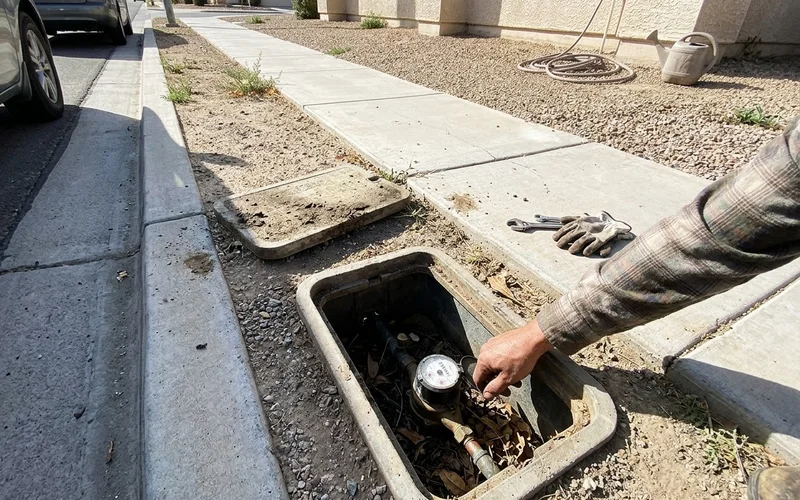
3. Are both valves fully open? (2 minutes) Check the house main and the meter valve near the curb. Landscapers, previous owners, and move-out shutoffs all leave valves closed.
4. Is the meter moving? (1 minute) With every tap closed, watch the low-flow indicator. Spinning with nothing running means water is escaping between the meter and the house, likely a broken service line.
Putting the clues together
| What you found | Most likely cause | What happens next |
|---|---|---|
| Cold night, some fixtures dry | Frozen line | Thaw gently; check for a split |
| Whole street dry | Utility outage or main break | Wait for the provider |
| A valve was closed | Someone closed it | Open slowly, then check for leaks |
| Valve handle spins freely, no flow | Valve gate broke off the stem | Valve replacement |
| Pressure faded over days to nothing | Failed pressure regulator | Regulator replacement |
| Meter spinning, wet patch in the yard | Broken service line | Leak location and line repair |
| Pressure dropping for years in an older home | Galvanized pipe corroded nearly shut | Repipe evaluation |
| Softener at the entry | Softener valve stuck or failed | Put it in bypass and test |
Pressure regulators
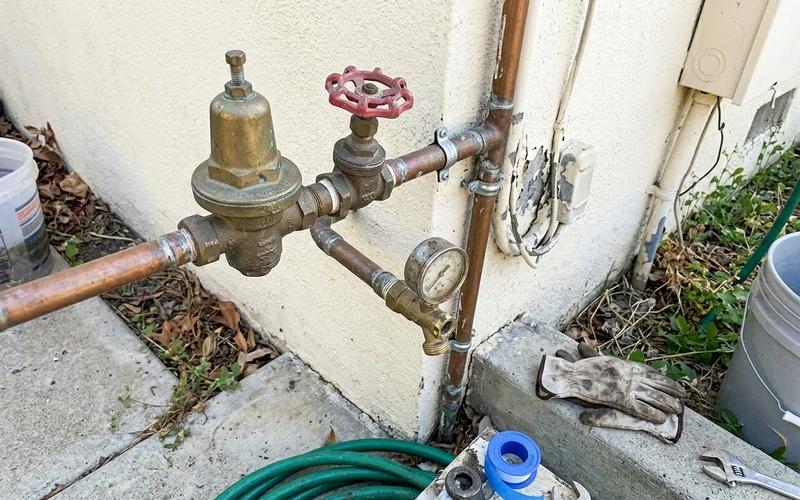
Many homes have a brass regulator where the main enters. Its diaphragm and seat sit in hard well water around the clock and wear out over time. When one fails, pressure often fades for a few days before dropping to almost nothing.
Older homes with galvanized pipe
Older houses, especially in historic towns like Bisbee, often still have galvanized supply pipe that narrows from the inside over decades. That shows up as pressure falling slowly for years, and the fix is new pipe. See repiping older homes.
Just moved in?
If you are opening a rental or a home you just bought, check that the main and meter valve are both open, put any softener in bypass to rule it out, and leave the water heater off until water is flowing and the tank has refilled.
The single most useful detail
Sudden or gradual? Sudden points to a freeze, a valve, a regulator, or a break. Gradual over months or years points to the pipe itself.
What to tell the assistant
When you call Sierra Vista Plumber Pros, the automated assistant answers in English or Spanish and records whether it is the whole house or one fixture, whether neighbors have water, whether it was sudden or gradual, whether it followed a freezing night, whether both valves are open, and the rough age of the home. Those answers reach a local plumber, who can arrive with the right parts. For a house with no water, our emergency plumbing line is answered 24/7 at 520-555-0100. Ask about any service call fee when you book.