Check the shower head, the faucet aerators, and the inside of the kettle. If there is a white crust on any of them, you are looking at the same minerals that are building up inside your water heater, your valves, and your supply lines right now. You just cannot see those.
Water softeners in Sierra Vista are less about comfort and more about protecting the expensive parts of a plumbing system from scale. The catch is that there is no single local hardness number to size from, so the right system starts with a test at your own tap. Sierra Vista Plumber Pros connects you with a local plumber who tests your water, sizes the system properly, and explains what each option will and will not do.
Start With a Tap Test, Not Someone Else’s Number
Plenty of softeners get sold off a general range, a neighbor’s reading, or a figure from a different city. That is a shortcut that leads to undersized equipment. A hardness test at your fixture takes a few minutes, you see the result yourself, and every decision after that is based on it.
Testing matters even more here because the water is not uniform. Homes on different utilities, different wells, or private wells can read noticeably differently. Older galvanized supply lines can also change what actually arrives at the faucet. If someone recommends a specific softener without testing your water first, ask them to test.
Where Your Water Comes From
All tap water in the area is groundwater. Arizona Water Company and Liberty Utilities (Bella Vista Water) pump from wells in the Sierra Vista Sub-Basin of the Upper San Pedro Basin, some of them hundreds of feet deep. Water that spends that long moving through rock picks up calcium and magnesium on the way.
Neither utility lists a hardness number in its annual water quality report, and the mineral content shifts from one well to another. The honest summary is that local water runs moderately hard to hard depending on the well. For a homeowner, that means the hardness in your house is something to measure, not something to look up.
What Hard Water Does to a House Over Time
Hardness is not a health problem. It is a plumbing and appliance problem, and it adds up quietly:
- Water heaters collect scale on the tank bottom, overheat, and wear out early.
- Tankless units clog their heat exchangers and need regular descaling.
- Faucet cartridges and valve seats grind against mineral deposits until they leak or stick.
- Shower heads and aerators lose flow as scale closes the openings.
- Dishwashers and washing machines work harder and leave spots and residue behind.
Once treatment is in place, the visible changes come quickly: less crust, spot-free glassware, soap that lathers easily. The bigger payoff shows up over years, in a water heater that keeps its efficiency and faucets that stop needing new cartridges.
Four Systems, Four Different Jobs
These products are often sold together, but they solve different problems.
| System | What It Does | What It Does Not Do |
|---|---|---|
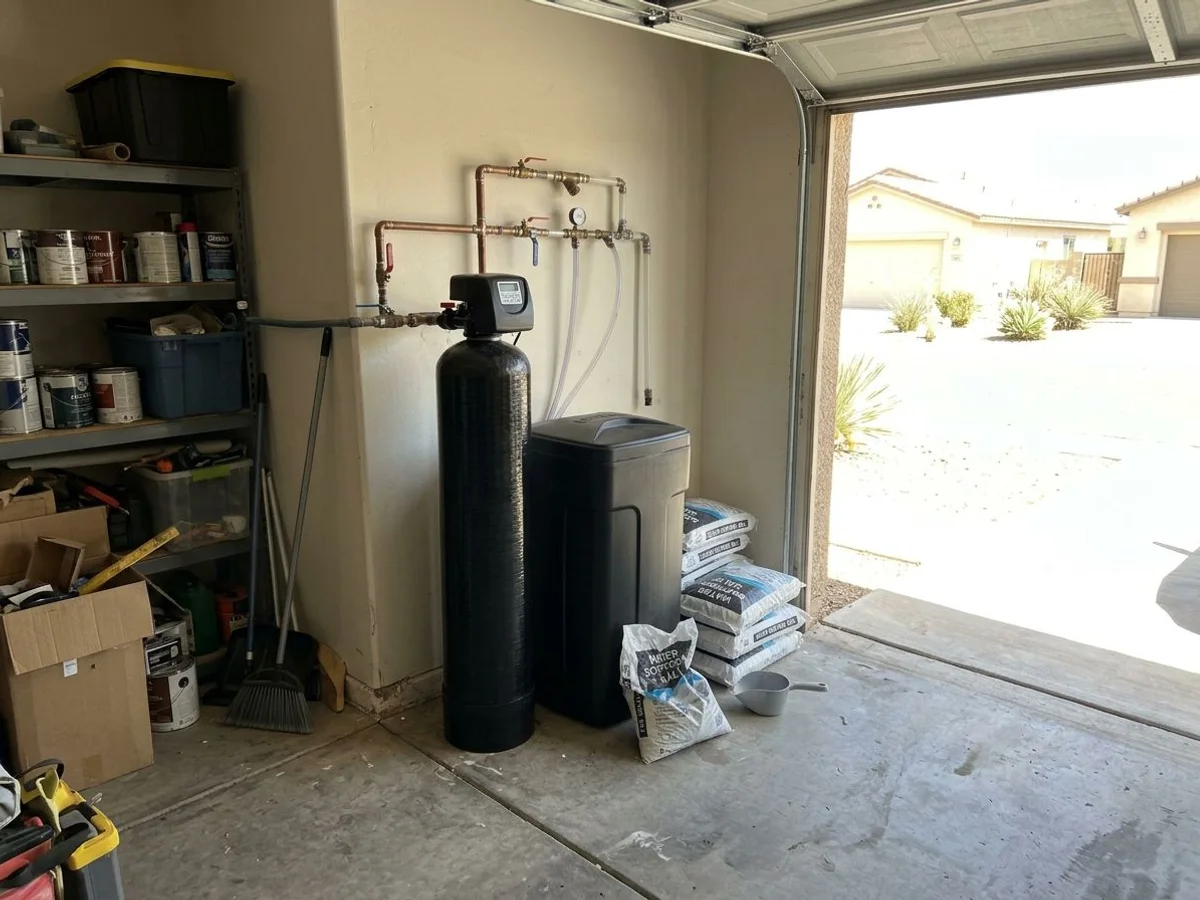
| Ion-exchange softener | Removes calcium and magnesium for the whole house, protecting pipes, heater, and fixtures | Improve drinking water taste on its own |
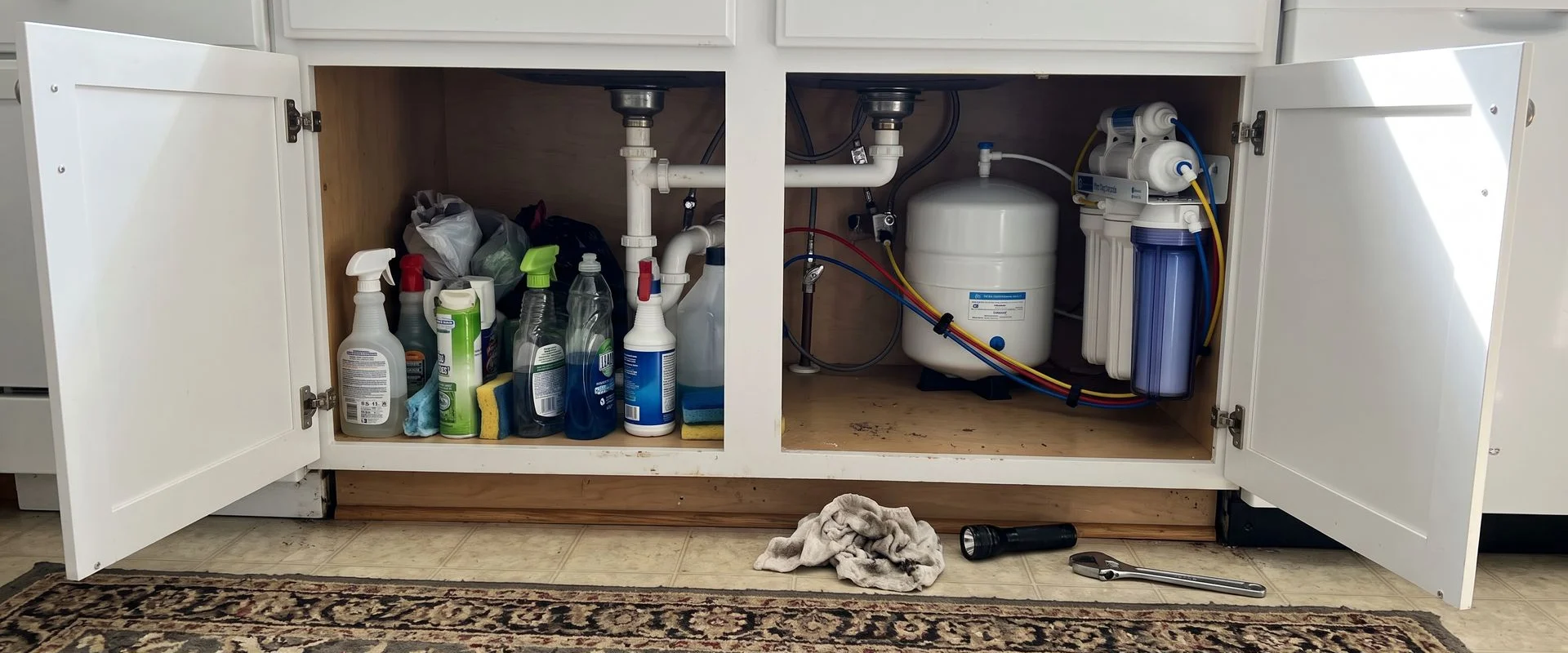
| Under-sink reverse osmosis | Reduces dissolved solids at one drinking tap | Protect the rest of the plumbing |
| Whole-house filtration | Reduces sediment, chlorine taste, and odor at every tap | Remove hardness |
| Salt-free conditioner | Changes how scale forms so it sticks less | Remove hardness; protection is limited on harder water |
A common and sensible setup is a softener protecting the plumbing plus an RO tap in the kitchen for drinking and cooking. That covers both concerns without paying twice for the same result.
Getting the Grain Capacity Right
The math is simple once you have a reading. Daily water use multiplied by measured hardness gives the grains that need removing each day. The softener needs enough capacity to handle that load and still go several days between regenerations.
| Household Size | Approximate Daily Use | What Drives the Size |
|---|---|---|
| 1 to 2 people | About 150 gallons | Your tap reading and how often you want it to regenerate |
| 3 to 4 people | About 300 gallons | Same, with more margin for laundry and guests |
| 5 or more | 400 gallons and up | A larger tank or a twin-tank setup |
An undersized unit regenerates constantly, burns through salt, and wears out its resin early. An oversized one costs more without adding protection.
Buying and Owning a Softener: What to Get Right
- Do not choose on price alone. The cheapest units are often too small for harder well water.
- Program the valve to your reading. A factory setting left in place under-treats the water.
- Insist on a bypass valve. Without one, servicing the softener means shutting off water to the whole house.
- Put the brine tank somewhere reachable. Salt bags are heavy, and an awkward tank means skipped refills.
- Do not count on filtration for scale. Carbon and sediment filters do nothing for hardness.
- Keep up with the schedule. Hard-water homes use more salt, and many households top up every few weeks. RO systems need filter changes on a schedule and a new membrane every few years.
Renters, Landlords and Short Stays
Families arrive and leave on orders all year, and a lot of homes here are rentals. If you are renting or expect to move in a few years, an under-sink RO unit or a simple filter is often the practical choice. Landlords and property managers usually get more value from a whole-home softener, because protecting the water heater and fixtures pays off across many tenants. When a unit sits empty between tenants, put the softener in bypass or vacation mode, and run the taps for a few minutes before using RO water again.
You can request a free estimate, and our water treatment guides cover sizing and salt-free options in more detail. Water treatment installs and service are available across Sierra Vista, Hereford, Huachuca City, Palominas, and Whetstone.