A kitchen sink that takes five minutes to empty is annoying. A shower that fills with dirty water every time someone flushes is a different kind of problem. Both start the same way, with something narrowing a pipe, but the right fix depends on where that narrowing sits and what caused it.
Drain cleaning in Sierra Vista done properly has two parts: clearing the line with the right tool, and figuring out why it closed in the first place. A drain that backs up three times in a year is not unlucky. It is telling you something about the pipe. Sierra Vista Plumber Pros connects you with a local plumber who clears the blockage and, when the pattern calls for it, runs a camera down the line to see what is really going on.
Why Clearing the Clog Is Only Half the Job
Most homeowners judge a drain call by whether water flows when the plumber leaves. That matters, but it is the easy part. The harder and more useful question is whether it will still be flowing in six months.
A one-time clog, like a wad of hair in a tub trap or a grease plug after a holiday meal, gets cleared and that is the end of it. A recurring clog is different. It usually means the pipe has a defect that keeps catching debris, and every clearing just resets the clock. Paying for the same symptom over and over is the most common and most avoidable cost in drain work. When a line keeps coming back, the sensible move is a camera inspection, so the next dollar goes toward a fix instead of another visit.
Monsoon Season and Your Sewer Lateral
The summer monsoon brings close to half of the year’s rain in July and August, mostly in short, heavy storms. That is hard on drains in a few specific ways.
- Saturated ground puts pressure on buried pipe. A lateral with a cracked or shifted joint can let soil and water in during a storm, then clog with sediment afterward.
- Yard drains and low cleanouts take on runoff. If a cleanout cap is missing or cracked, storm water can flow straight into the sewer line and overload it.
- Roots grow toward moisture. After a wet summer, roots that found a loose joint tend to push further in.
If your lowest drain gurgles or rises during or right after a big storm, stop running water inside and call. It is usually the first sign of a lateral that needs a look, and the 24/7 line is answered in English or Spanish.
Where the Clog Is: Reading the Symptoms
Before anyone picks up a tool, the symptoms say a lot about where the problem is.
- One slow sink, tub, or shower. The clog is in that fixture’s trap or branch line. Hair and soap in bathrooms, grease and food scraps in kitchens.
- Several fixtures in one bathroom acting up. A shared branch is narrowing, often where the bathroom group ties into the main.
- Toilets gurgling when the washer drains. Air is being pulled through traps because the line downstream cannot carry the flow.
- Water rising in a tub or floor drain when you flush. The main lateral is blocked downstream of everything. Treat it as an emergency.
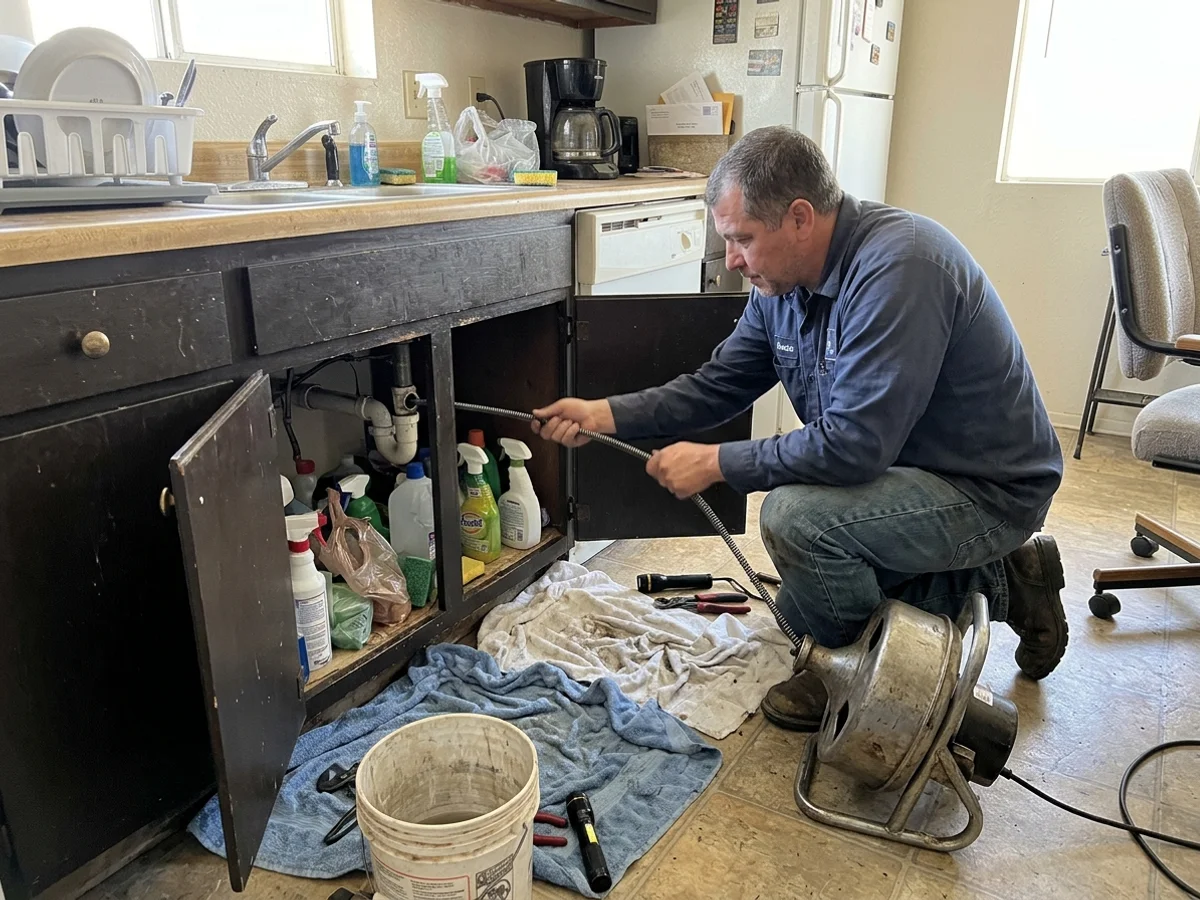
Sorting this out on the phone means the plumber shows up with the right machine. A small hand auger will not touch a root-filled main, and a large drum machine is overkill for a hair clog.
Cable or Hydro Jet: Choosing the Right Method
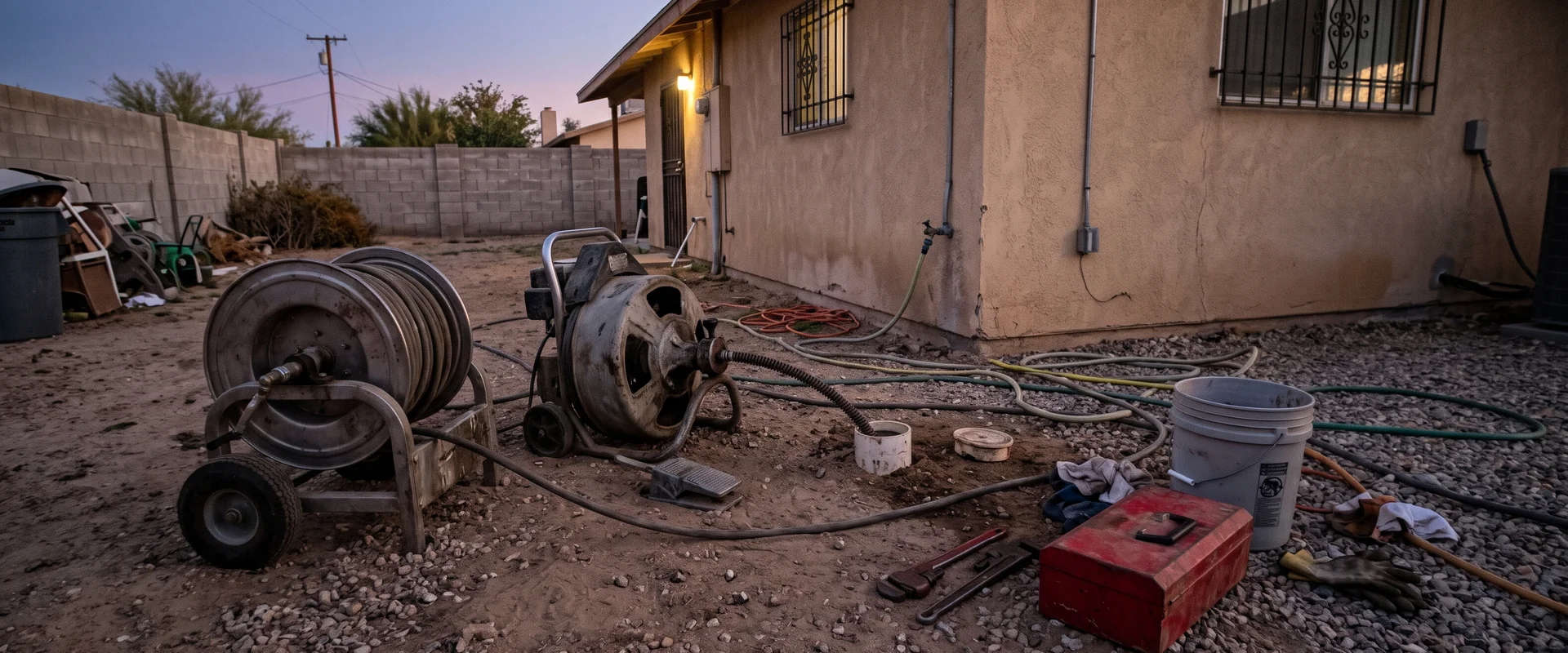
Cabling runs a rotating steel cable with a cutting head through the line. It punches through a blockage and restores flow. For an ordinary clog, that is all you need.
Hydro jetting sends high-pressure water through a nozzle that scours the whole inside of the pipe. It is the better choice when the problem is coating the walls rather than plugging one spot:
- Grease cools, clings, and narrows the line until one dinner closes it. A cable cuts a channel. Jetting takes the wall back to bare pipe.
- Mineral scale builds up because local well water runs moderately hard to hard, and the hot side of dishwasher and laundry lines collects it fastest.
- Roots get cut back to the joint, and the camera then shows whether that joint needs repair.
- Laundry sludge made of lint, detergent, and scale forms a paste in standpipes, especially where laundry ties into an undersized branch.
What a Camera Finds That a Cable Never Will
A self-leveling camera goes in through the cleanout and records the line as it travels. You see the screen, including the pipe material, standing water, scale, roots, and any damage. The defects that cause repeat clogs look like this:
- Bellies, where a section of buried line has sagged and holds water and sediment.
- Offsets, where two sections have shifted apart at a joint, leaving a lip that catches waste.
- Cracks and breaks, which snag debris and invite roots.
- Collapsed sections, usually old cast iron or clay that has given out.
The camera head carries a small transmitter called a sonde. A locator above ground picks up its signal, so the exact spot and depth of a defect can be marked with paint. Any digging then happens in one place. Sometimes the footage shows a healthy pipe and a one-time clog, which is a perfectly good answer to get.
Older Homes, Rentals and Pre-Purchase Checks
The historic mining towns nearby have some of the oldest drain lines in the county. Cast iron drains in older homes corrode from the inside, building a rough scale that grabs debris and eventually cracks. Clay laterals have joints that roots love.
Housing also changes hands often here. Families move in and out on orders, and rentals turn over regularly. A house that sat empty for weeks can have dried-out traps and settled sediment. If you are buying, ask for a sewer camera inspection during your contingency window. If you manage rentals, a quick camera look between tenants can catch a failing lateral before the new tenant finds it the hard way.
Repair Paths When the Line Has Failed
If the camera confirms a failed section, there are generally two ways forward.
| Repair Method | Best For | Property Impact |
|---|---|---|
| Trenchless lining | Cracked or root-damaged pipe that still holds its shape | Minimal digging; driveways and landscaping stay intact |
| Excavation and replacement | Fully collapsed or badly offset sections | Trenching and surface restoration needed |
A sound line with a temporary clog may just need a thorough jetting. Request a free estimate, ask about any service call fee before booking, and you will get a plain explanation of which option fits. Our drain and sewer guides compare these approaches in more depth.
Habits That Keep Drains Open Longer
- Skip chemical openers. They seldom clear a real blockage and leave caustic water in the trap.
- Scrape grease into the trash. Running the disposal only pushes it further down the line.
- Pay attention to gurgling. It is often the first warning before a main line backup.
- Keep cleanout caps on and intact, especially before monsoon season.
Drain clearing and sewer camera inspection are available across Sierra Vista, Huachuca City, Hereford, Bisbee, and Tombstone. A backup coming into the house is a 24/7 call.