A broken drain under a slab is not like a supply-side slab leak. It is not under pressure, so there is no hiss and no spike on the water meter. It seeps wastewater slowly into the soil and lets sewer gas and pests find their way in. Because the signs arrive one at a time, they often get treated as separate small problems until someone runs a camera.
The seven signs, with how fast to act
| # | Sign | What it suggests | How soon |
|---|---|---|---|
| 1 | Drains slow again within weeks of clearing | A break or offset is catching waste | Book a camera |
| 2 | Tub gurgles when the toilet flushes | Air moving through a damaged shared line | Book a camera |
| 3 | Sewer odor indoors with every trap full | Gas escaping through soil under the slab | Soon |
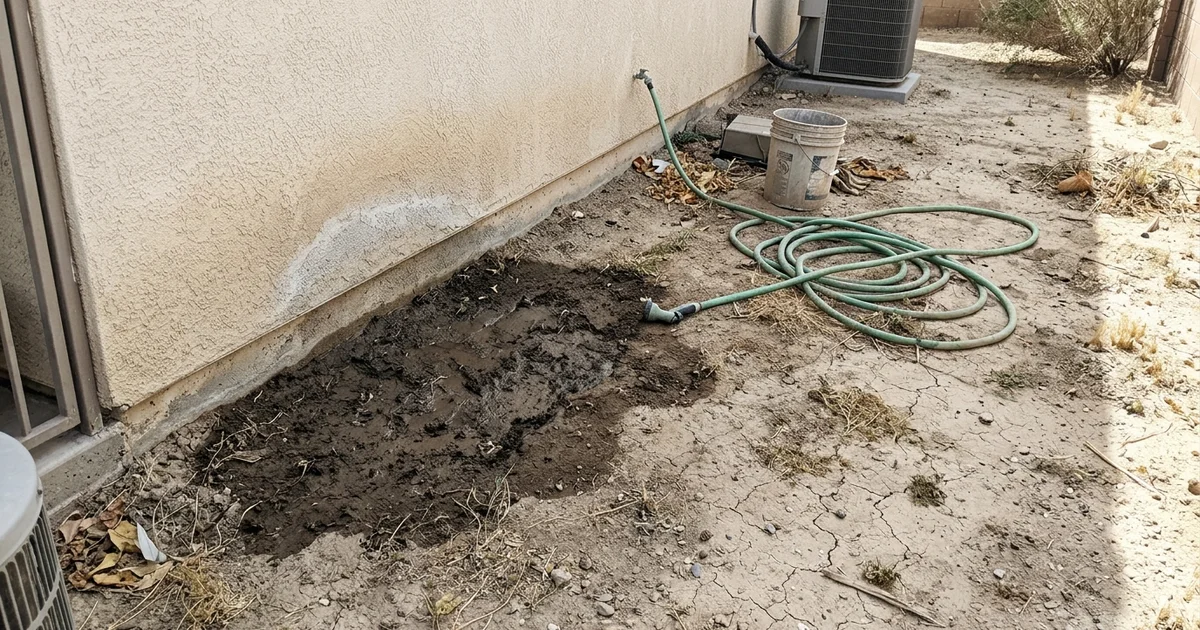
| 4 | Damp or soft soil at the foundation in dry weather | Wastewater saturating the ground | Soon |
| 5 | Small flies around drains or baseboards | Sewer flies breed in contaminated soil and sludge | Soon |
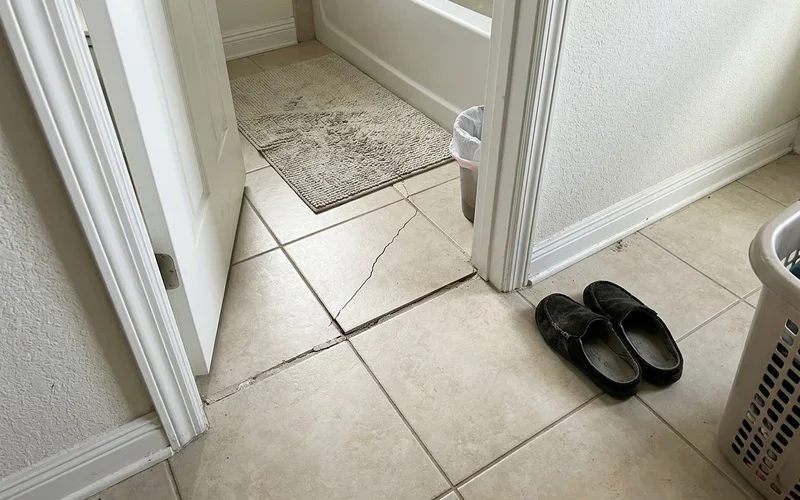
| 6 | New cracks in tile, grout, or slab | Soil under the floor may be washing out | Promptly |
| 7 | A soft, sunken spot in the floor | Advanced soil loss | Call now |
Signs 1 and 2 together are the most common early pattern. Add 3 or 4 and the case for a broken line is strong.
When the monsoon reveals it
In Sierra Vista, July and August bring nearly half of the year’s rain in a few weeks of heavy storms. That is often when a weak drain line stops hiding. Saturated soil puts extra load on cracked or corroded pipe, groundwater can seep into a broken line and slow it down, and yard drains that overflow toward the foundation make a marginal sewer line back up for the first time. If your drains started acting up right after a run of storms, mention it. It changes what the plumber looks for.
Drain break or supply leak?
Both happen under the slab, and they get confused.
| Broken drain | Supply slab leak | |
|---|---|---|
| Pressure | None, gravity flow | Pressurized |
| Main clues | Odor, repeat clogs, damp soil | Warm spot, jumped water bill, sound of running water |
| Meter moves with every tap off? | No | Yes |
| Pests | Sewer flies, sometimes roaches | Rare |
| Confirmed by | Sewer camera | Pressure test, acoustic and thermal locating |
A warm floor and a moving meter point to the supply side, covered on our leak detection and slab leak repair page.
Why these lines fail
Cast iron that has reached its age. Older homes, including many in the historic mining towns of Bisbee and Tombstone, still have original cast iron drains. Cast iron corrodes from the inside, the wall thins, and the pipe eventually splits along the bottom where wastewater runs.
Ground movement. Soil that is soaked by summer storms and then dries out over the long dry months expands and shrinks. That movement presses on rigid pipe, pulling joints into offsets and letting sections sag.
Buildup. Grease and mineral scale narrow drain lines over time, giving waste more places to snag near any crack.
Local expert insight
In a rental that sat empty between tenants, the first sign is often a strong smell on move-in day. Refill every trap first. If the odor stays once all traps hold water, start thinking about the line under the slab.
How it gets confirmed
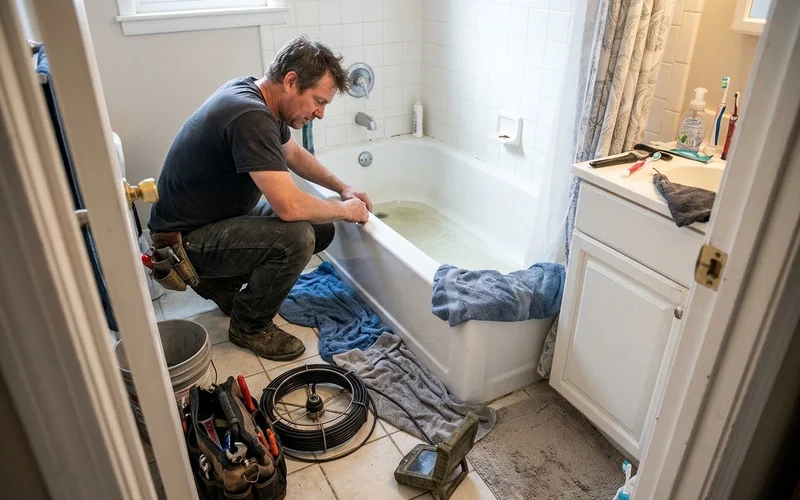
- Clear the line if needed so the camera can pass.
- Run the camera from the cleanout and watch for cracks, offsets, sags, or collapse.
- Locate from above. The transmitter in the camera head is traced from the surface and the spot is marked with its depth.
- Smoke test if needed, to confirm where gas reaches the living space.
Our guide on what a sewer camera inspection finds shows what each problem looks like on screen.
Repair paths
- Spot repair: open the slab at the marked point, replace the damaged section, patch the concrete.
- Lining: a resin liner cures inside the old pipe, forming a new pipe within it, when the pipe is cracked but still in line.
- Reroute: abandon the run under the slab and route a new drain another way.
What does not work is clearing the same drain every few months while wastewater keeps soaking the soil under your floor. Book a camera through our drain cleaning service. Sierra Vista Plumber Pros answers 24/7 in English or Spanish, and you can request a free estimate. Ask about any service call fee before booking.