Non-destructive locating

Slab Leak Repair Sierra Vista: Leak Detection, Sewer Gas Testing and Repiping

Finding hidden leaks behind walls, under slabs, and in buried lines around Sierra Vista, plus sewer gas smoke testing and whole-house repiping for failing galvanized, polybutylene, and aging copper.

Answered 24/7 English & Spanish Free estimate request Sierra Vista & Cochise County
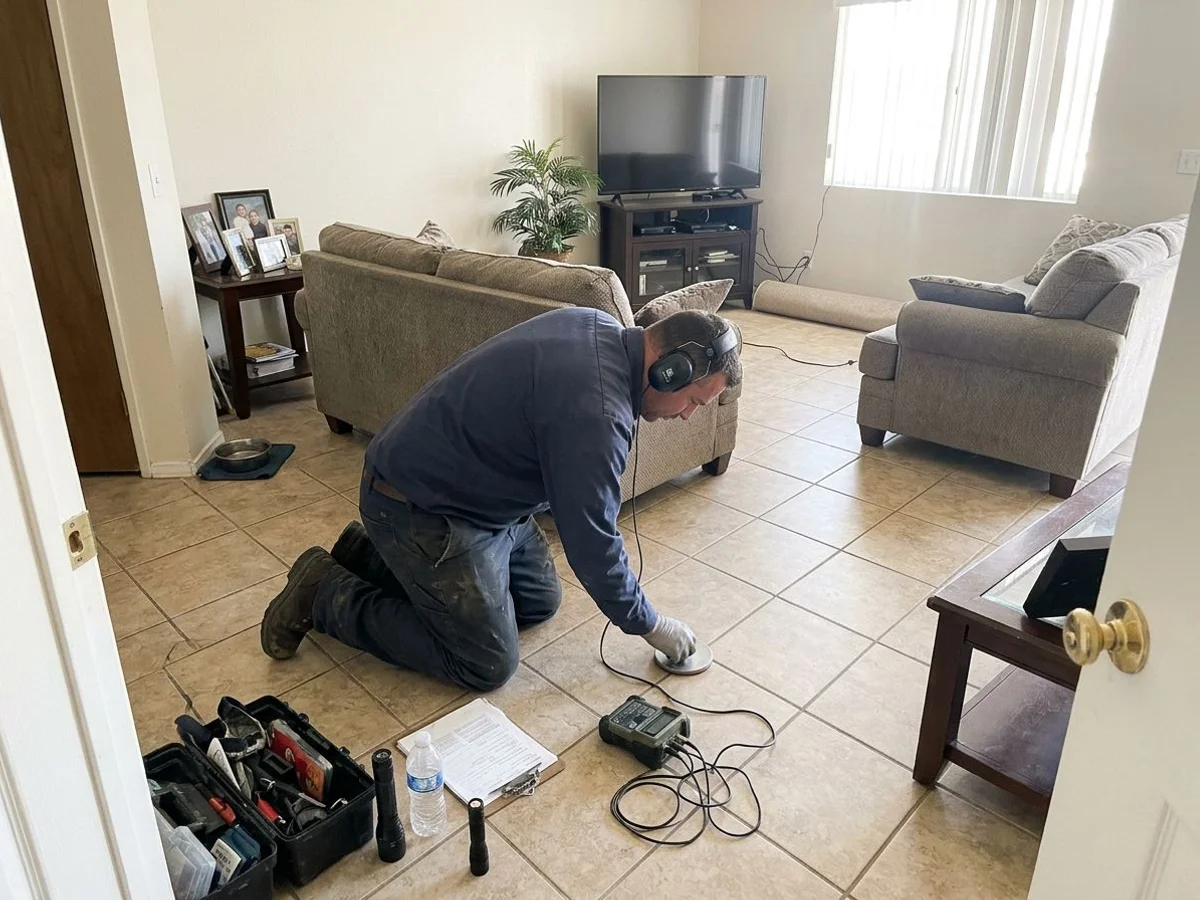
Plumber using acoustic leak detection equipment on a tile floor in a Sierra Vista home
Serving Sierra Vista & Cochise County
Answered 24/7
Nights, weekends, holidays
Free estimate request
No obligation to proceed
Se habla español
Atendemos en español

The leaks that cost the most are the ones you never see. A pinhole in a copper line under the slab. A supply pipe that split in a garage wall during a cold night. A buried line cracked between the meter and the house. By the time a stain or puddle shows up, water may have been running for weeks.

Slab leak repair in Sierra Vista starts well before anyone touches concrete. The first job is proving there is a leak at all, then finding exactly where it is with equipment designed to take the guesswork out. Sierra Vista Plumber Pros connects you with a local plumber for hidden leak location, slab leaks, sewer gas diagnostics, and whole-house repiping when patching no longer makes sense.

Signs of a Hidden Leak, and the Two-Minute Meter Test

  • The water bill climbed and nothing about your household use changed.
  • A warm spot on the floor, usually tile, which often means a hot water line is leaking under the slab.
  • Running water sounds when every faucet, toilet, and appliance is off.
  • Damp patches at the base of an interior wall, along baseboards, or on exterior stucco.
  • Low pressure in one part of the house that was fine a month ago.

Any one of these is worth a quick test. Turn off every fixture in the house, then look at the water meter. Most meters have a small low-flow indicator, often a triangle or a little dial. If it keeps turning, water is going somewhere.

Freeze Splits You Cannot See

At about 4,600 feet, January nights regularly fall to around freezing, and a short overnight freeze is enough to crack a supply line in an uninsulated garage, a crawl space, or an exterior wall. The ice plugs the crack while it is frozen. When it thaws the next morning, water starts running inside the wall or under the house, often with no visible sign for days.

That is why exposed runs get checked first after a cold snap. If the meter moves with everything turned off the morning after a freeze, the garage, crawl space, hose bib connections, and any lines along north-facing exterior walls are the likeliest places to look.

Pinpointing the Leak Before Anything Gets Opened

Once a leak is confirmed, a pressure test separates supply-side problems from drain-side ones. Then the locating begins.

Detection MethodHow It WorksBest Used For
Acoustic listeningAmplifies the sound of pressurized water escapingLeaks under concrete slabs
Thermal imagingShows small surface temperature differencesHot water leaks under hard flooring
Electromagnetic tracingFollows a signal along a metal pipeMapping line routes before any cut

Concrete is opened at the located spot and nowhere else. One small access cut is a very different job from tearing out a whole hallway of tile.

Older Pipe That Is Running Out of Life

Pipe material explains a lot of the leak calls in this part of Cochise County.

  • Galvanized steel. The historic mining towns, Bisbee and Tombstone especially, have many homes still on galvanized supply lines. They corrode from the inside, choking pressure at every fixture, then start leaking at threaded joints.
  • Polybutylene. Homes built from the late 1970s to the mid 1990s may still have gray polybutylene supply pipe, which is known for failing at the fittings without much warning.
  • Aging copper. Copper that has carried hard well water for decades can pit and eventually develop pinholes, often under the slab where it is hardest to reach.

Moving ground adds stress too. Buried lines that already have weak spots can crack or separate when soil settles or swells after heavy monsoon rains.

Spot Repair, Reroute, or Repipe

There are three realistic ways to handle a slab leak, and each suits a different situation.

  • Spot repair: Open the slab at the located point and fix that section. Best for a single leak in an otherwise sound line.
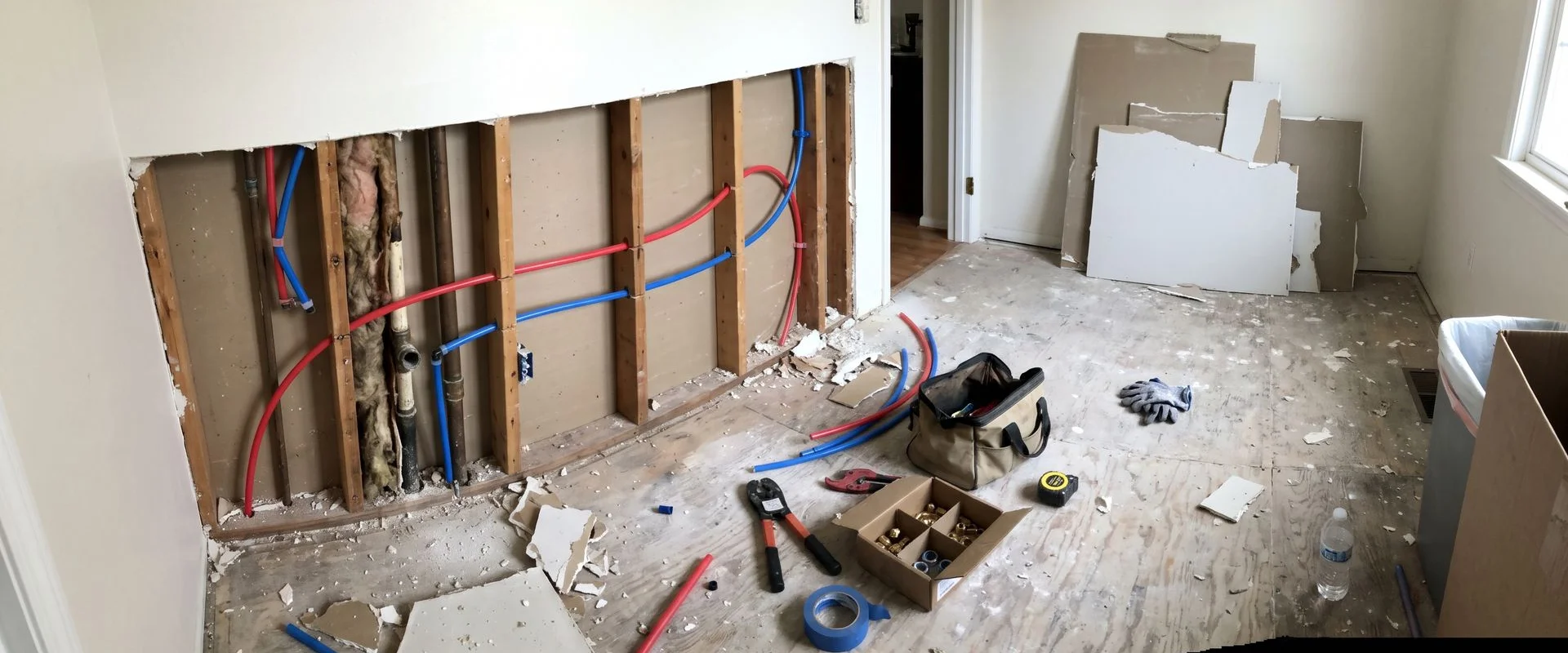
  • Reroute: Abandon the leaking run under the slab and run a new line through the attic or walls. Often the better value when that run has leaked before.
  • Whole-house repipe: Replace the supply system. The right call when pressure is low everywhere, water runs rusty on the first draw, or pinholes keep appearing in different rooms.
Piping MaterialStrengthsGood Fit For
PEXFlexible, fewer wall openings, does not pit in hard waterMost whole-house repipes
CopperRigid, long service historyExposed runs and layouts suited to rigid pipe

Ask whether a permit is needed for the scope of work before it begins. After any repair, the system is pressure tested and the meter rechecked before walls or floors are closed up.

Tracking Down a Sewer Gas Smell

A persistent sewage odor means gas from the drain system is reaching the living space. There is usually no wet spot to follow, which is what makes it so frustrating to chase.

Smoke testing solves that. Non-toxic fog is pushed through the drain and vent system at low pressure, and it comes out wherever the system is open. In one pass it can reveal:

  • Dry or missing P-traps
  • Unsealed vent penetrations behind drywall
  • Cracked drain lines inside wall cavities
  • Failed toilet wax rings or broken closet flanges

Vacant Homes, Rentals and New Arrivals

Housing turns over constantly here. Families arrive and leave on orders all year, and landlords and property managers often have units sitting empty between tenants. Empty homes are where hidden leaks do the most damage, because nobody is around to hear the water or notice the warm floor.

A few habits catch most problems early:

  • Before a unit sits empty: Close the main, or at least the supply to the water heater, toilets, and washer.
  • At move-in: Watch the meter for ten minutes with everything off before unpacking.
  • If it smells like sewer gas: Run water in every sink, tub, and floor drain to refill the traps. If the smell stays, call for a smoke test.

Leak detection, smoke testing, and repiping are available across Sierra Vista, Huachuca City, Hereford, Bisbee, and Tombstone. Our leak and repiping guides go deeper on telling these situations apart, and you can request a free estimate any time.
The difference

Why choose us for leak & slab

Locate first, open second

Acoustic and thermal tools narrow a slab leak to a small spot. Cutting concrete is the last step, not the first.

Freeze-damage awareness

Short overnight freezes crack lines in garages, crawl spaces, and exterior walls. Those exposed runs are checked early.

Smoke testing for sewer gas

Non-toxic fog through the drain and vent system shows exactly where gas escapes, instead of opening walls on a hunch.

Straight talk on repiping

Pinholes in several rooms and weak pressure everywhere means the pipe itself is the problem. You hear that before paying for another patch.

Proof the leak is gone

A pressure test and meter check after every repair, so you leave with evidence instead of an assumption.

Answered at any hour

A slab leak that has surfaced or a line running inside a wall is urgent, and the line is answered 24/7 in English or Spanish.

Step by step

How our leak & slab work goes

  1. 01

    Prove the leak exists

    A meter check and pressure test confirm water is actually escaping and show whether it is on the supply side or the drain side.

  2. 02

    Narrow it down without demolition

    Acoustic listening, thermal imaging, and electromagnetic line tracing pin the leak to a small area before anything is opened.

  3. 03

    Compare the fixes

    Spot repair, reroute, or repipe. For a slab leak those differ a lot in cost and lifespan, and you get all three explained.

  4. 04

    Repair and recheck

    Fix it, re-pressurize, and watch the meter again so you know the leak is closed before the plumber leaves.

Get a free estimate before anything is scheduled

Call and describe the problem. We triage it over the phone, quote it honestly, and there are never surprises when the truck shows up.

Side by side

How we compare

Feature Typical provider Sierra Vista Plumber Pros
Finding the leak Open drywall and look Acoustic, thermal, and line tracing first
Slab leaks One quoted approach Spot repair, reroute, or repipe compared side by side
Sewer gas odor Reseal a toilet and hope Smoke test to find the real escape point
Repeat pinholes Patch each one Assess whether the system needs repiping
After the repair Job closed Pressure test and meter verification
On the job

Our leak & slab work

Click any photo to enlarge.

Common questions

Leak & Slab FAQs

How can I tell if I have a slab leak?

Look for a warm patch on the floor, a water bill that jumped without any change in use, the sound of running water with everything off, cracked flooring, or damp spots along a baseboard. Because the water is under concrete, a slab leak can run for weeks before anything shows.

Can you find a leak without tearing up my floors?

That is what the equipment is for. A meter check and pressure test confirm the leak and which system it is on. Acoustic sensors pick up the sound of escaping water, thermal imaging shows the heat of a hot-side leak, and line tracing maps the pipe route. Concrete is opened only at the located spot.

Can a winter freeze cause a hidden leak?

Yes. Lines in uninsulated garages, crawl spaces, and exterior walls can split during a short overnight freeze. The ice plugs the crack until it thaws, so the leak often starts the next morning somewhere you cannot see. If your meter moves with everything off after a cold night, check those exposed runs first.

Should I repair the slab leak or reroute the line?

A single leak in an otherwise healthy line is often a spot repair. If that run has leaked before or the copper is pitted throughout, rerouting it through the attic or walls usually costs less over time than cutting the slab again. You will see both options.

We just moved in and the first water bill was huge. What should I check?

Turn off every fixture and watch the meter's low-flow indicator. If it still moves, water is escaping somewhere. Check toilets for running, look under sinks and around the water heater, then call if you cannot find it. Sierra Vista Plumber Pros hears this often from families who just arrived on orders.

Why does my house smell like sewer gas when nothing is leaking?

Most often a dry P-trap, especially in a home or rental that sat empty for a while. Other causes include an unsealed vent penetration, a cracked drain line in a wall, or a failed toilet wax ring.

Is smoke testing safe?

Yes. The fog is non-toxic and is pushed through the drain and vent system at low pressure. Wherever the system is open to the living space, the fog appears, which pinpoints the problem without opening walls.

Do I need a whole-house repipe?

Low pressure at every fixture, rusty water on the first draw, or pinholes showing up in more than one place all point to the pipe itself. Galvanized lines in older homes, common in Bisbee and Tombstone, and polybutylene in homes built from the late 1970s to the mid 1990s are the usual candidates in Sierra Vista and the surrounding towns.

PEX or copper for a repipe?

Both are proven. PEX is flexible, needs fewer wall openings, and does not pit in hard water. Copper is rigid and long-lived where conditions suit it. The right choice depends on layout, access, and budget. Ask whether a permit is required for the scope of work before it starts.

Still have a question?

Call and describe it. We triage over the phone before anyone is dispatched.

Call 520-555-0100
Read first

Guides on leak & slab

How to Tell If You Have a Slab Leak: Warning Signs and the Meter Test

Warm floor spots, a jumped water bill, running water with everything off: slab leak signs ranked by urgency, the five-minute meter test, and what happens when a professional locates it.

Read the guide

Moving to Sierra Vista on Orders? Plumbing Checks for Your New Home or Rental

A first-week plumbing checklist for families moving to Sierra Vista on orders: find the main valve, check the meter for leaks, test the water, restart the water heater, and prepare for winter freezes.

Read the guide

Repiping Older Cochise County Homes: Galvanized, Polybutylene, PEX, or Copper?

How to tell when galvanized or polybutylene supply pipe is finished, PEX vs copper for the replacement, whole-house vs spot repair, and what a repipe looks like day to day.

Read the guide

Sewer Gas Smell in an Empty House? Dry P-Traps and Other Real Causes

Why homes smell like sewer gas, especially after sitting empty between tenants or owners: dry P-traps, failed wax rings, missing traps, unsealed vents, cracked drains, and smoke testing.

Read the guide

Sierra Vista Landlord Checklist: Plumbing Checks Between Tenants

A step-by-step plumbing checklist for landlords and property managers: check for hidden leaks, protect a vacant unit from freezes and dry traps, and hand the next tenant a home that works.

Read the guide

Slab Leak or Foundation Movement? How to Tell What Is Cracking Your Floor

Floor cracks and sticking doors can mean a slab leak or ordinary ground movement. The clues for each, how monsoon storms complicate the picture, the test that settles it, and what to do next.

Read the guide
Plumber loading tools into a service van at dusk in Sierra Vista
Answered 24/7, English & Spanish

Need leak & slab in Cochise County?

Call and describe what is happening. Your call is answered in English or Spanish at any hour, and the estimate is free.

Free estimate request Sierra Vista & Cochise County Se habla español
520-555-0100