Sierra Vista has a steady rhythm of move-outs and move-ins. Military families arrive and leave on orders year round, and rentals often turn over on short notice. For landlords and property managers, the gap between tenants is the best chance to catch plumbing problems before they become the next tenant’s emergency call. This checklist takes about forty-five minutes per unit.
Part 1: The walk-through after move-out
-
Check the meter first. Turn off every fixture, then watch the low-flow indicator at the meter for a few minutes. Movement with nothing running means a leak somewhere: a toilet, a supply line, or under the slab.
-
Look under every sink. Check for damp cabinet floors, swollen particleboard, stains, and corroded supply connections.
-
Rock every toilet. A toilet that moves has a broken wax seal. Flush each one and listen for a refill that keeps going.
-
Run every faucet, hot and cold. Note stiff handles, drips, and weak flow. Weak flow everywhere in an older unit can mean aging galvanized pipe.
-
Inspect the water heater. Look for moisture at the base, rust at fittings, and a relief valve line that drips. Read the data plate for the age.
-
Test the drains. Fill and drain each sink and tub. Slow drains in several fixtures at once point to the main line, not a single clog.
-
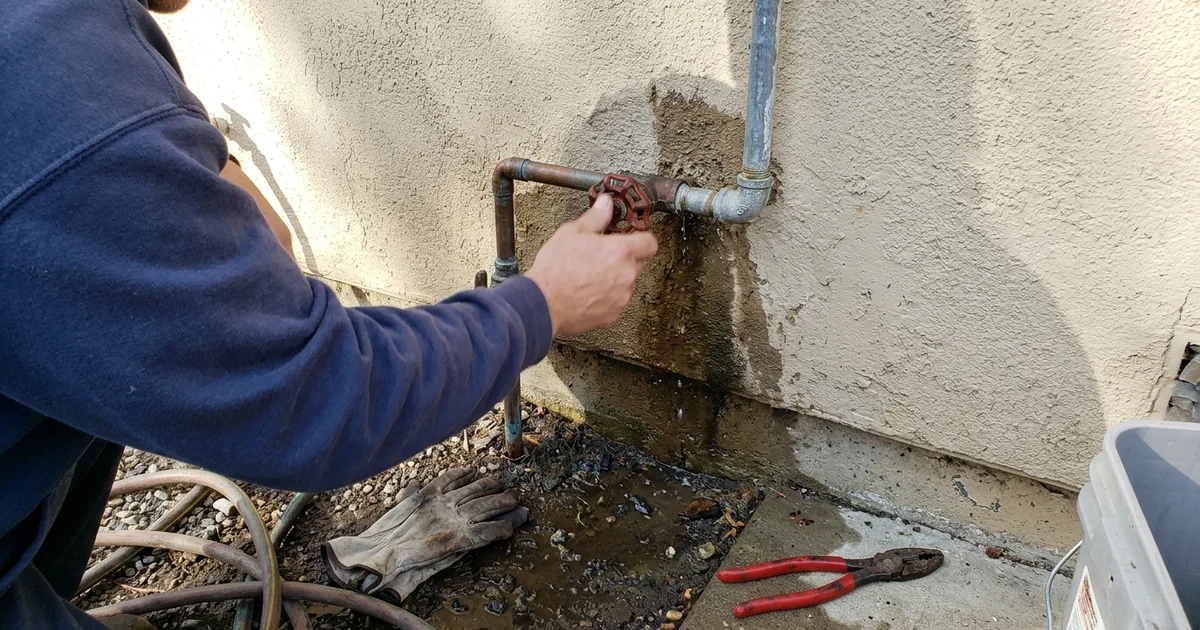
Find the main valve and exercise it. Close it and reopen it. If it is stuck, get it replaced while the unit is empty. Our guide on how to find and close the main water valve covers each valve type.
Part 2: Protect the unit while it sits empty
If it will be vacant more than a few days:
- Close the main valve.
- Set a gas water heater to vacation or pilot, or switch off an electric heater at the breaker. Do not leave a heater running with the main closed.
- Open one faucet briefly to relieve pressure, then close it.
- Close the washer valves and the ice maker line.
If it is winter:
- Disconnect garden hoses and drain the hose bibs.
- Cover the backflow preventer with an insulated cover.
- Check that pipes in the garage and any crawl space are insulated.
- If the heat will be off, drain the lines after closing the main.
For the drains:
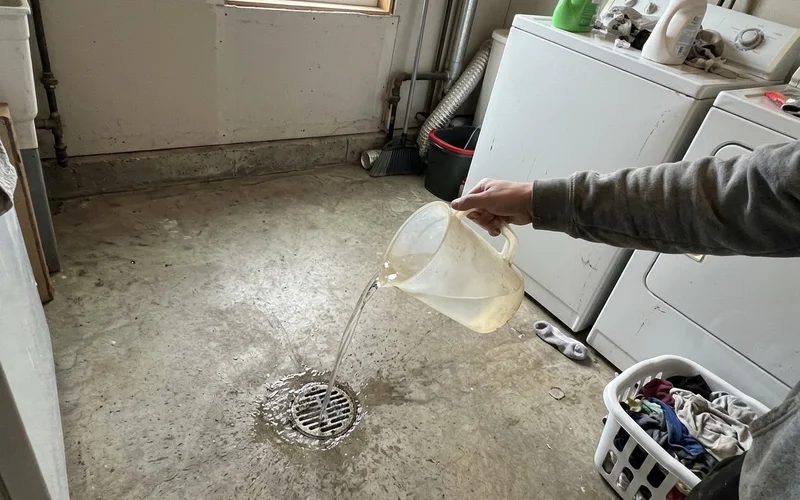
- Pour water into every drain, including floor drains and tubs that rarely get used. A small splash of mineral oil on top of floor drain traps slows evaporation.
Part 3: Before the next tenant moves in
- Open the main slowly and check the meter again with everything off.
- Let the water heater tank fill completely before restoring gas or power.
- Run water down every drain to refill the traps.
- Leave a short note for the tenant showing where the main valve is and how to reach you. A tagged valve and a photo save a lot of water in an emergency.
Turnover quick reference
| Finding | Fix before move-in? |
|---|---|
| Meter moves with everything off | Yes, find the leak first |
| Running toilet or rocking toilet | Yes |
| Stuck main or angle stops | Yes |
| Water heater moisture or rusty hot water | Yes, repair or replace |
| One slow drain | Clear it |
| Several slow drains, repeated history | Camera the main line |
| Weak flow at every fixture | Evaluate the supply pipe |
When to call
Call if the meter moves with the water off, if you find stains or soft spots, if a floor feels warm in one place, or if the water heater leaks. Our leak detection service confirms whether a leak is real and where it is before anything gets opened up. Sierra Vista Plumber Pros answers at any hour in English or Spanish, so a tenant who calls at night is heard in their language and the details are routed to a local plumber. Request a free estimate and ask about any service call fee before booking.