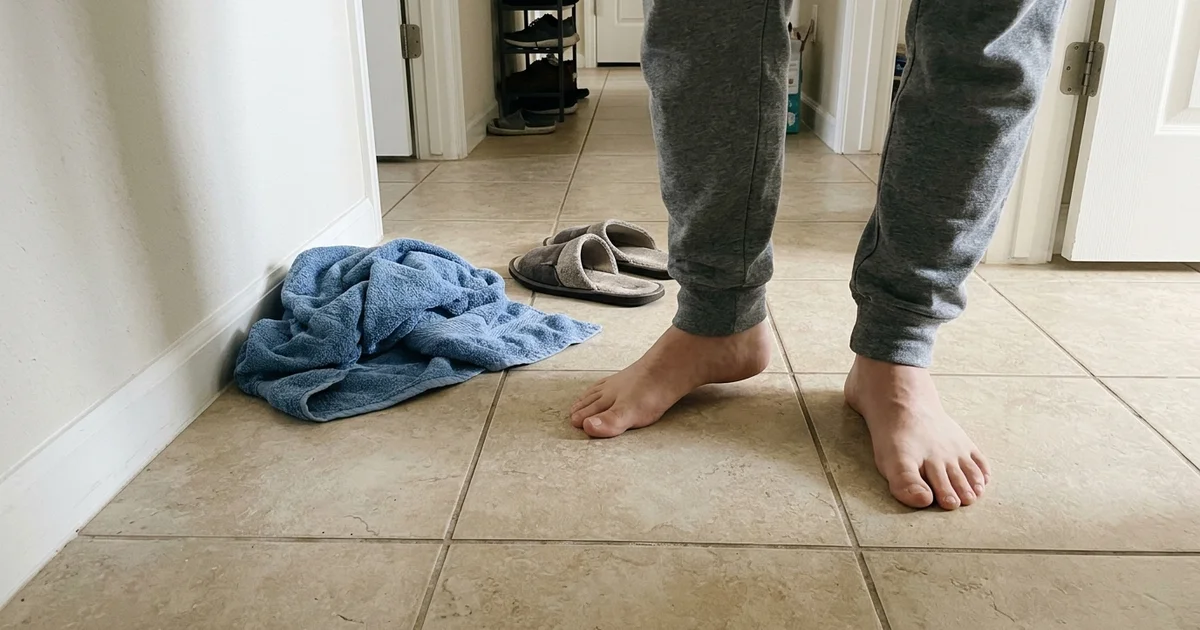
A slab leak is a pressurized water line leaking under the concrete floor of a house. You usually cannot see it, and in a dry climate you often cannot smell it either. The water simply disappears into the soil while the meter keeps turning. Here is how to recognize one, confirm it in five minutes, and get it found without tearing up the floor.
Start with the meter test
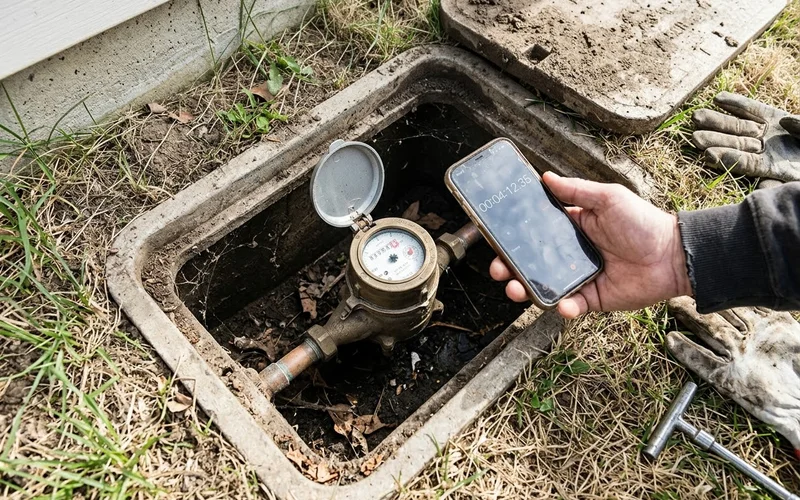
This one test moves you from “maybe” to “yes” or “no.”
- Turn off every water use: faucets, dishwasher, washer, ice maker, irrigation, and any softener regeneration.
- Open the meter box near the curb and find the low-flow indicator, a small triangle, star, or dial that spins with even tiny flow.
- Watch it for two or three minutes. Movement means water is leaving the system.
- Close the main shutoff at the house and look again. Still moving? The leak is between the meter and the house. Stopped? The leak is inside the house, which includes under the slab.
Before blaming the slab, rule out the easy ones: a toilet that runs silently and an outdoor hose bib or irrigation line that split during a freeze. Both make the meter move.
Signs ranked by urgency
| Sign | What it usually means | What to do |
|---|---|---|
| Water coming up through the floor or at a wall base | A large leak has saturated the soil | Call now and shut the main |
| New tile or slab cracks along with other signs | Water may be washing soil out | Call now |
| Warm floor spot with no heat source | Hot line leaking under that area | Call today |
| Running or hissing sound with every fixture off | Water moving where it should not | Call today |
| Meter moving with everything off | Confirmed leak past the meter | Call today |
| Water bill jumped with no change in use | Water is leaving the system | Test this week |
| Damp carpet, swollen baseboard, or musty smell at a wall | Water wicking up from below | Test this week |
| Damp soil at the foundation in a dry month | Possible leak near the exterior | Test this week |
| Lower water pressure with any of the above | A large leak is pulling flow | Raise the urgency |
One sign alone may have another explanation. Two or more, especially with a moving meter, make a strong case.
Why slab lines fail
Age and material. Older copper lines can develop pinholes from decades of hard well water moving through them, and once one appears, others in the same run often follow. Homes built from the late 1970s to the mid 1990s may have polybutylene somewhere in the system, which tends to fail at fittings.
Hot lines fail first. Heat speeds corrosion, and hot lines expand and contract against their bedding with every use. That is why the warm-floor symptom is so common.
Ground movement. Soil that is soaked by monsoon storms and then dries out for months can shift around pipes cast in or under the slab. If floor cracks are part of the story, read slab leak or foundation movement.
The empty-house problem
In Sierra Vista, homes often sit empty between tenants or while waiting on a sale after new orders. A slab leak can run that whole time unnoticed. Do the meter test at move-out and again at move-in, and close the main if the house will be vacant.
How a professional locates it
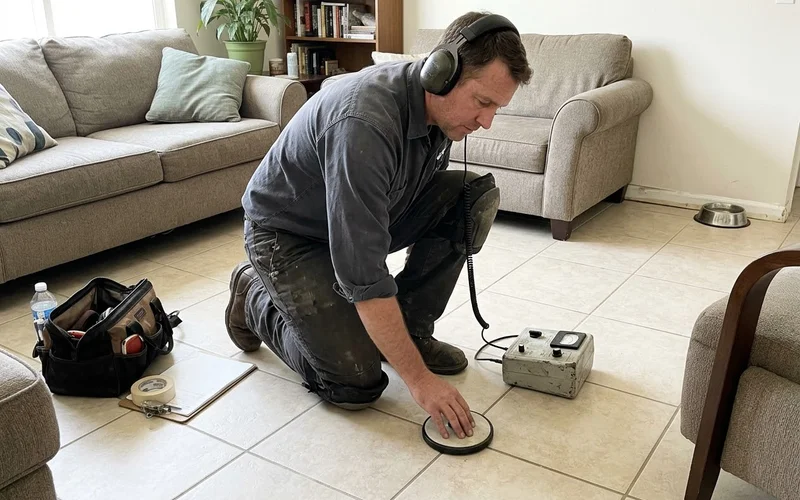
- Isolation and pressure testing confirms the leak and separates the hot side from the cold.
- Acoustic listening picks up the sound of pressurized water escaping through concrete and soil.
- Thermal imaging shows the heat pattern of a hot-side leak.
- Line tracing maps where the pipe actually runs so listening happens in the right places.
Concrete is opened only at the located spot. Depending on the line and the house, the fix may be a spot repair through the slab or a reroute through walls or the attic, which avoids the slab entirely.
What to do right now
If the meter moves, close the main between uses and request leak detection and slab leak repair. Do not start breaking tile to look. Sierra Vista Plumber Pros answers every call 24/7 in English or Spanish, and the assistant sends what you are seeing to a local plumber. Request a free estimate, and ask about any service call fee before booking.