New orders, a new house, a new town. When you are unpacking boxes and finding schools, plumbing is the last thing on your list, until something leaks. Many homes and rentals here change hands frequently and may have sat empty for a while before you arrived. A few checks in your first week catch problems while they are still small, and they get you ready for a climate that surprises a lot of newcomers. These steps apply to homes and rentals off post.
Day one: find and test the main valve
Before anything goes wrong, find the main shutoff. It is usually where the supply line enters the house, on the street-facing wall near a hose bib or in the garage. Make sure you can close it by hand, then reopen it. If it will not budge, tell your landlord or get it replaced. A valve that does not close is useless in an emergency. Tag it so everyone in the family can find it.
Day one: check the meter
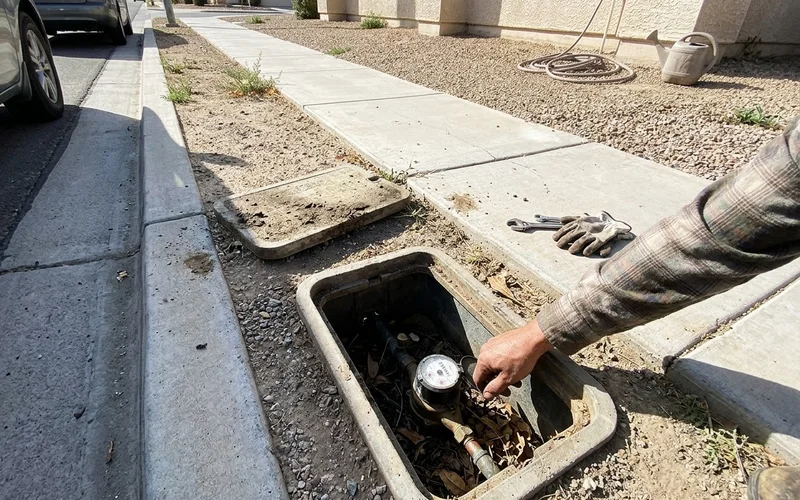
- Turn off every fixture, the dishwasher, the washer, the ice maker, and any irrigation.
- Open the meter box near the curb and find the low-flow indicator, a small triangle, star, or dial.
- Watch it for a few minutes.
If it moves with everything off, water is going somewhere: a running toilet, a supply line, or possibly a leak under the slab. Note it and report it right away, especially in a rental. Our guide on how to tell if you have a slab leak explains the next steps.
First week: refill the traps and run everything
Run water down every drain for a minute, including floor drains and the tub nobody uses. If the house sat empty, the traps may have dried out. A sewer smell that goes away once the traps are full was just that. If it stays, see sewer smell in a house that sat empty.
Then open each faucet hot and cold, flush every toilet, and look under each sink while the water runs.
First week: restart the water heater carefully
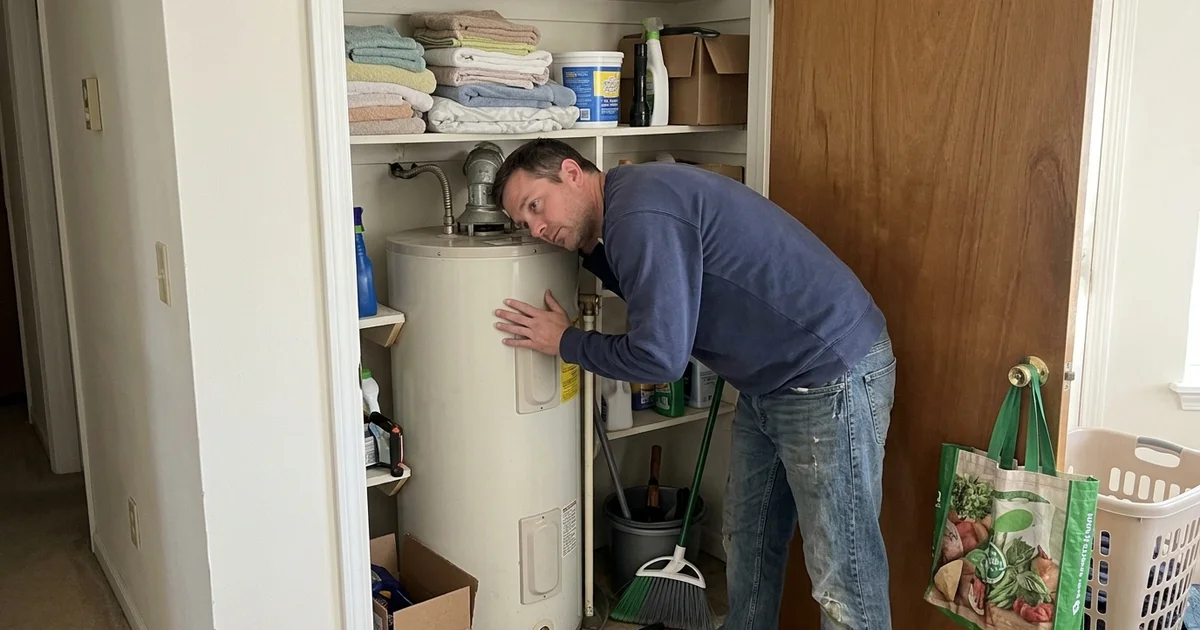
If the heater was off during the vacancy, make sure the tank is completely full before turning on gas or power: open a hot faucet until water runs steadily. Then check the base and fittings for moisture. Popping as it heats usually means scale from hard well water. Rusty hot water or a damp base is worth a call.
First month: test your water
Every home here runs on groundwater from deep wells, and it is moderately hard to hard depending on the well. A hardness test strip at the kitchen tap tells you whether a softener is worth considering and how to set one if the house already has it.
Before the first cold night
Families arriving in Sierra Vista from warmer posts are often caught off guard. At 4,600 feet, January nights average in the low 30s, and short freezes split exposed pipes, hose bibs, backflow preventers, and irrigation lines.
- Disconnect garden hoses before the first freeze.
- Cover the backflow preventer.
- Check that pipes in the garage or any crawl space are insulated.
- Know which faucets are on exterior walls and let one drip on the coldest nights.
When to call
Call if the meter moves with everything off, if you find stains or soft spots, if a floor feels warm in one area, if you hear running water with everything shut off, or if the water heater leaks. Our leak detection service pinpoints hidden leaks before anything gets opened up.
Sierra Vista Plumber Pros answers around the clock in English or Spanish, which helps when you are new in town and do not have a plumber yet. The automated assistant takes down the problem and routes it to a local plumber. Request a free estimate, and ask about any service call fee before booking.