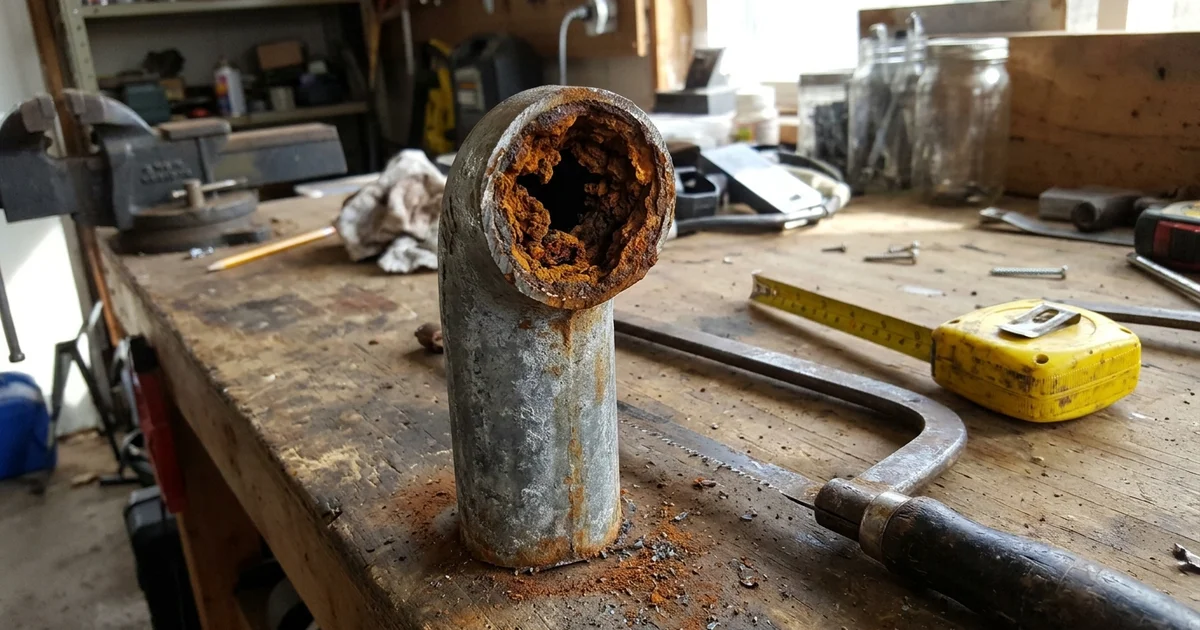
Old supply pipe rarely fails all at once. It wears out over years: a weaker shower, a rusty first glass of water in the morning, a pinhole leak in the garage, then another in a different room. By the time a homeowner is asking about repiping, they usually already sense that patching has stopped working. This guide helps you make the call with clear criteria.
Which pipe do you have?
The housing stock here gives you two common problem materials, and they fail very differently.
| Galvanized steel | Polybutylene (PB) | |
|---|---|---|
| Where it shows up | Older homes, especially the historic houses in Bisbee and Tombstone | Homes built from the late 1970s to the mid 1990s |
| What it looks like | Gray metal pipe with threaded joints | Flexible gray, blue, or black plastic, often stamped PB2110 |
| How it fails | Corrodes from the inside, narrowing until pressure drops | Becomes brittle and fails at fittings, often suddenly |
| Usual warning | Years of falling pressure and rusty first-draw water | Often little warning before a split |
| Repair or replace | Replace once symptoms are house-wide | Replace when found |
Galvanized pipe loses its zinc coating from the inside over decades, and the exposed steel rusts into rough lumps that close the passage. Sierra Vista’s hard well water adds mineral scale on top, narrowing it further.
Signs the problem is the whole system
A single weak faucet is often just a clogged aerator or worn cartridge. These point to the pipes themselves:
- Low pressure at every fixture.
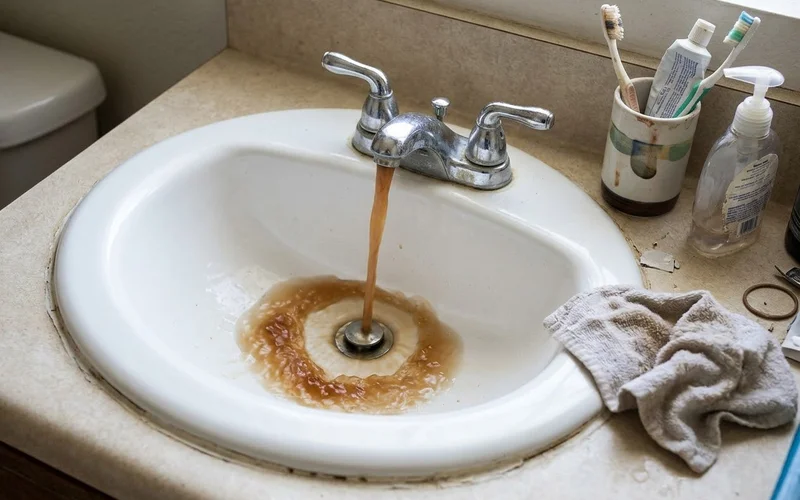
- Tinted water for the first few seconds in the morning.
- Pressure drops sharply when a second tap opens.
- Rust or weeping at threaded joints in the garage or utility area.
- Pinhole leaks in more than one place within a year or two.
- Leak repairs in different parts of the house.
If several apply, the pipe is the problem. If leaks also seem to be under the floor, our guide to slab leak signs covers how to confirm it.
PEX vs copper vs keeping the old pipe
| Criteria | PEX | Copper | Keep the old pipe |
|---|---|---|---|
| Wall openings needed | Fewer; flexible runs go around obstacles | More; rigid runs and soldered joints | None now, more damage later |
| Hard-water effects | Not affected by scale corrosion | Can pit over decades | Already failing |
| Freeze tolerance | Can stretch slightly before splitting | Splits when frozen solid | Splits, and old joints fail |
| Minor movement | Flexible | Rigid | Rigid and brittle |
| Install time | Faster | Slower | n/a |
| Relative cost | Usually lower | Usually higher | Rising with every repair |
No pipe is freeze-proof. Pipes in garages, crawl spaces, and exterior walls still need insulation at this elevation, where January nights regularly drop below freezing. PEX simply gives you more margin.
Whole-house or spot repair?
A spot repair makes sense when one section failed for an obvious reason, the rest of the house has good pressure and clear water, and the home is not plumbed throughout in galvanized or polybutylene.
A whole-house repipe makes sense when pressure is down everywhere, first-draw water is tinted, leaks have shown up in several places, or the home is plumbed in polybutylene.
Every spot repair carries its own access, labor, and drywall patching, and after three of them you still own old pipe. One planned repipe usually comes out ahead before the third emergency.
Do it while the walls are open
Remodeling a kitchen or bath in an older home? That is the cheapest time to repipe, since much of the wall access is already part of the job.
What a repipe looks like, day by day
- Planning and permits. Ask whether a permit is required at your address and who pulls it.
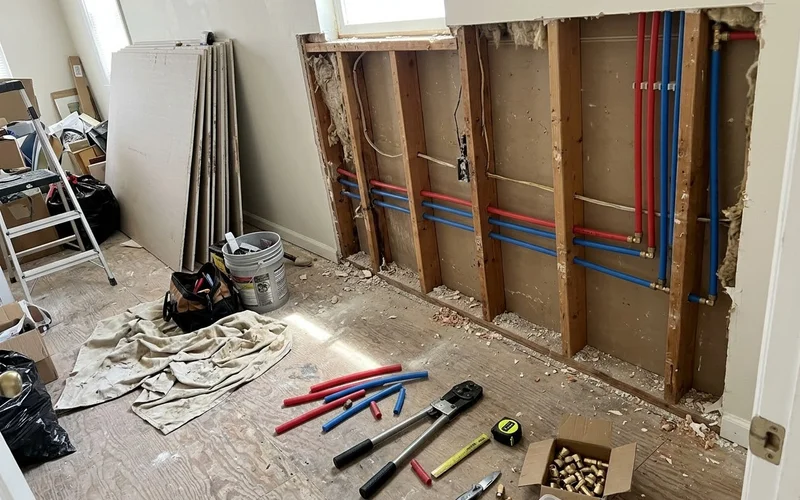
- Access openings. Small, patchable cuts at planned points, not whole walls.
- New runs. PEX to each fixture, often from a central manifold so each line has its own shutoff.
- Changeover. Water is off for part of the day while fixtures are connected and is usually back on each evening.
- Pressure test. Every connection is tested before walls close.
- Patching. Confirm whether drywall repair and texture are in the estimate.
Most single-family repipes take one to five working days depending on size and access.
Next step
Before pricing a repipe, confirm the problem really is system-wide. That is part of our leak detection and repiping work: pressure testing and checking for hidden leaks first. Request a free estimate from Sierra Vista Plumber Pros, and ask about any service call fee before booking. Calls are answered 24/7 in English or Spanish, and your details go to a local plumber.