Three kinds of water treatment are often sold side by side, and they sound interchangeable. They are not. Each one fixes a different problem, and buying the wrong one leaves you with the issue that sent you shopping. The fastest way to choose is to start from what you are seeing at home, not from the equipment.
Match the symptom first
| What you notice | Underlying problem | System that addresses it |
|---|---|---|
| White crust on fixtures, a heater that pops or died early, stiff valves | Hardness | Softener |
| Water tastes flat or mineral-heavy; you buy bottled water | Dissolved solids, taste | Reverse osmosis at the kitchen tap |
| Grit in aerators, cloudy water after utility work, chlorine smell | Sediment, chlorine | Whole-house filter |
| More than one of the above | More than one problem | A combination, installed in the right order |
On hard groundwater, the first row applies to most homes. How strongly it applies depends on your well, so a hardness test at the tap is step one.
How each system works
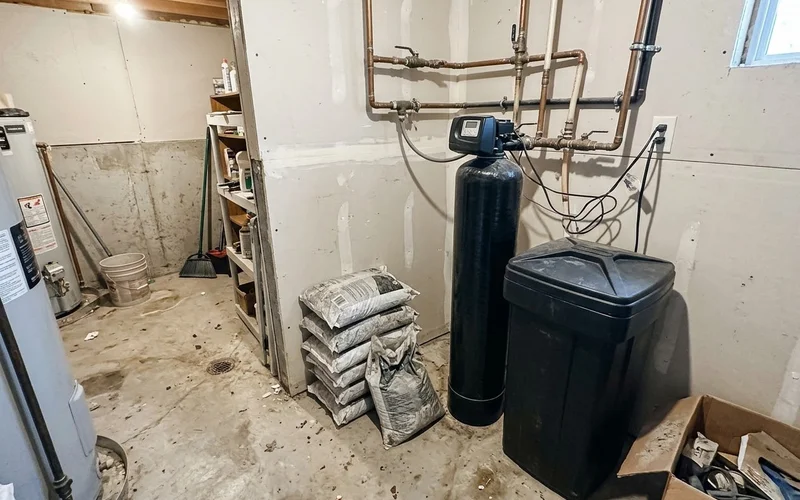
Softener. Installed where the main line enters. Resin beads swap calcium and magnesium for sodium, then the unit regenerates with brine. It is the only one of the three that protects the whole plumbing system from scale.
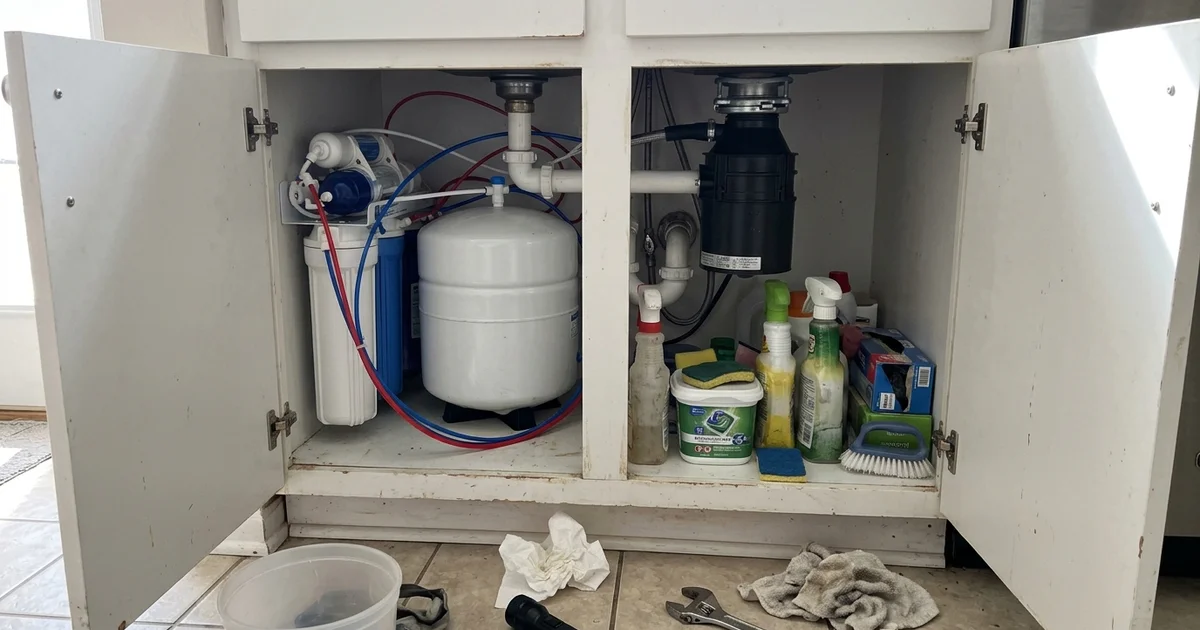
Reverse osmosis. Usually under the kitchen sink with its own small faucet. Water is pressed through a membrane that rejects most dissolved solids, and the treated water fills a storage tank. Excellent for drinking, coffee, and ice. Does nothing for the rest of the house.
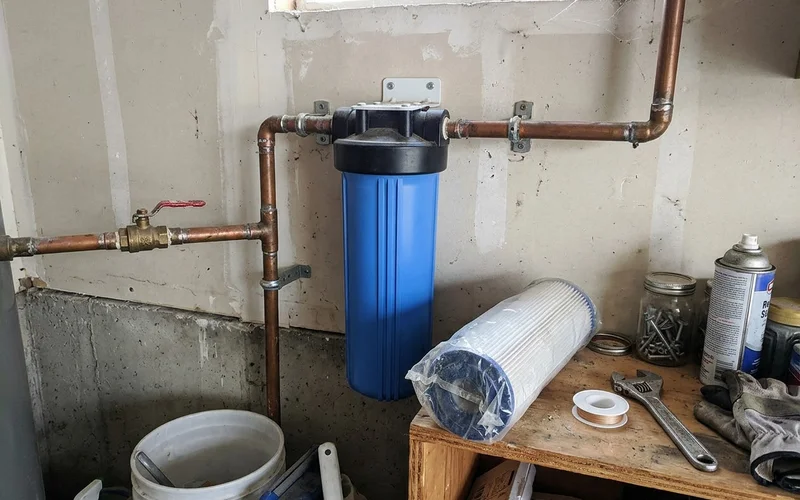
Whole-house filter. Cartridge housings on the main line with sediment and carbon stages. It cuts grit, chlorine taste, and odor at every fixture but leaves hardness untouched.
Head to head
| Criteria | Softener | Reverse osmosis | Whole-house filter |
|---|---|---|---|
| Removes hardness | Yes, whole house | Yes, one tap only | No |
| Protects water heater | Yes | No | No |
| Protects faucets and valves | Yes | No | Sediment only |
| Improves drinking taste | Slightly | Significantly | Somewhat |
| Coverage | Whole house | One tap | Whole house |
| Main upkeep | Salt every few weeks | Filter changes; membrane every few years | Cartridge changes every several months |
| Needs a drain | Yes | Yes, small | No |
Installing more than one
Order matters:
- Sediment filter first, if you have one. Grit shortens the life of everything after it.
- Softener next, on the main line.
- RO last, under the sink, fed with softened water.
RO membranes foul faster on hard water, so a softener upstream extends membrane life. In a home with both, the softener protects the RO too.
Two practical tips. Leave at least one outdoor hose bib and the irrigation line on unsoftened water; there is no reason to spend salt on the yard. And if any of this equipment sits in an unheated garage, insulate it and its lines. Short overnight freezes at this elevation can crack filter housings and softener valves just like pipes.
If you can only buy one
Pick the problem that is costing you money. On hard well water, that is usually scale: it is what shortens water heater life and seizes valves. A pitcher filter can cover drinking water in the meantime. A scaling heater cannot wait.
Where salt-free conditioners fit
Salt-free conditioners are often shown alongside softeners. They change how minerals behave so less scale sticks, but they do not remove hardness. Our guide on salt-based vs salt-free covers when a conditioner is still a sensible choice.
Common mix-ups
- “I have a softener and the water still tastes off.” You need an RO tap, not a bigger softener.
- “I have RO and the heater still scales.” RO treats one tap. The heater needs a whole-house softener.
- “I have a filter and there is crust everywhere.” Filters do not remove hardness.
- “My neighbor’s result was different.” Different wells, different water. Test your own tap.
Get the right answer
Every water softeners and reverse osmosis visit should start by testing your tap water and asking what made you call. In Sierra Vista and the surrounding area, Sierra Vista Plumber Pros answers 24/7 in English and Spanish. Request a free estimate and ask about any service call fee before booking.