When a pipe bursts, you are racing the clock. A broken supply line can put many gallons a minute onto the floor, so what you do in the first five minutes decides whether this is a mop-and-fan job or a tear-out. Here is the order, minute by minute.
Why freezes catch people off guard here
Days at 4,600 feet are mild most of the year, so it is easy to forget that January nights average around 30 to 34 degrees. Freezes in Sierra Vista do not last long, but they do happen, and a few hours below freezing is enough to split a hose bib, a backflow preventer, an irrigation line, or a pipe in an uninsulated garage or crawl space.
The tricky part is timing. Ice inside a pipe can crack it without any leak at all. The water comes when the sun warms things up the next morning and the ice melts. That is why so many freeze calls come in mid-morning, hours after the coldest point of the night.
Minute 0 to 1: Shut off the water
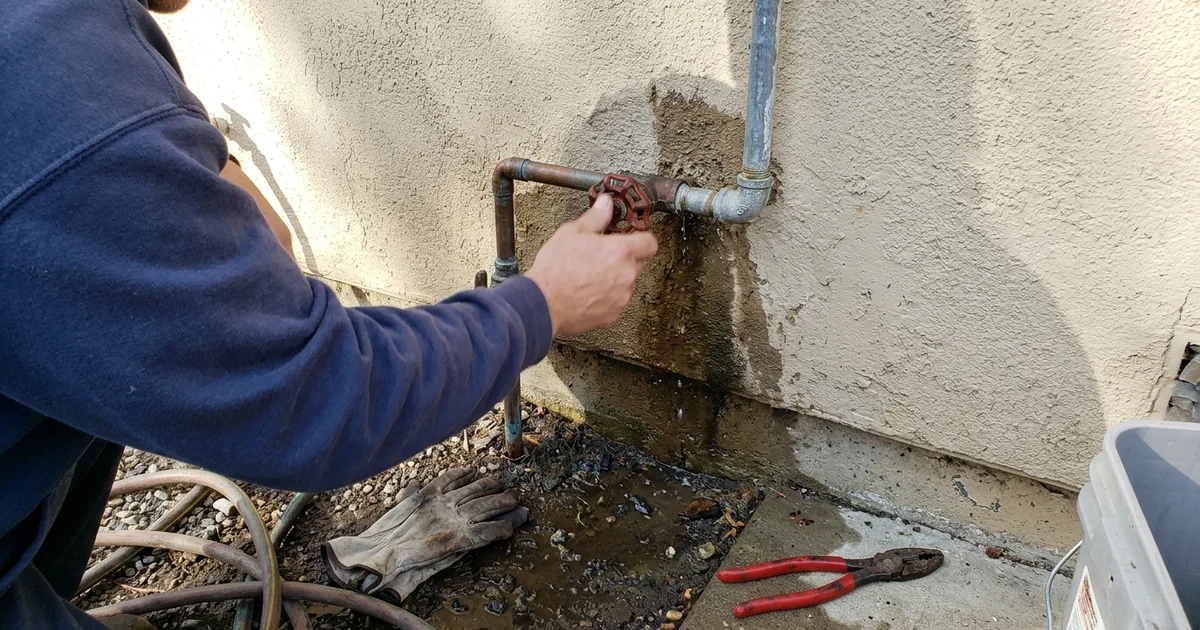
Go straight to the main valve. It is usually where the supply line enters the house: on the wall facing the street near a hose bib, in the garage, or near the water heater.
| Valve type | How to close it | Watch out for |
|---|---|---|
| Lever (ball valve) | Quarter turn so the lever sits across the pipe | Usually quick and reliable |
| Round wheel (gate valve) | Clockwise, several turns | Old ones stick; do not force |
If the wheel will not move with firm hand pressure, stop. Mineral buildup from hard well water can lock old gate valves, and forcing one can snap the stem. Go to the meter box at the curb instead and close the valve on the house side of the meter.
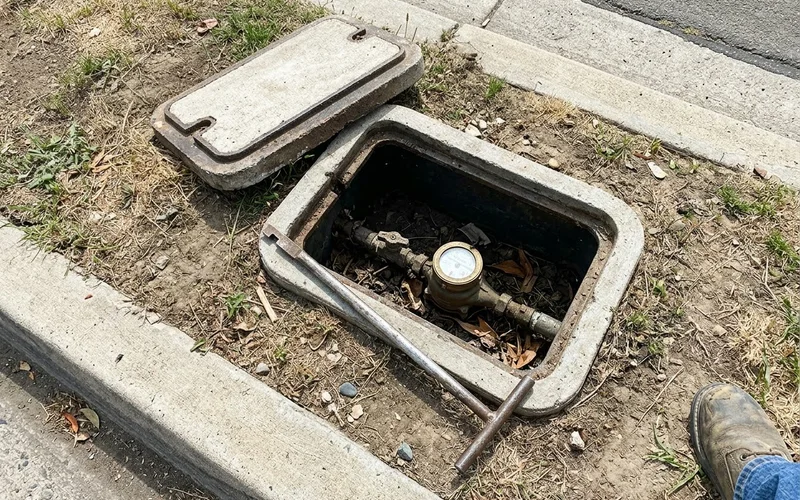
Cannot find either one? Call emergency plumbing at 520-555-0100. The line is answered around the clock in English and Spanish, and you can describe what you see while you keep looking. Later, on a calm day, read where your main water shutoff is so you are ready next time.
Minute 1 to 2: Cut power near the water
If water is spreading toward outlets, power strips, the washer, or the water heater, switch those circuits off at the breaker panel, but only if you can reach the panel from somewhere dry.
Do not wade in
If reaching the panel means walking through water, do not do it. Get everyone out of the room and call. No rug is worth the risk.
Minute 2 to 3: Drain the lines
Closing the main does not empty the pipes. They are still full and under pressure.
- Open the lowest faucet: a laundry sink, a tub, or an outdoor hose bib that is not the frozen one.
- Open one or two more faucets to let air in so the lines drain quickly.
Water heater: leave it alone unless it is the source. If it is, close the cold inlet on top and turn the gas control off or switch off its breaker.
Minute 3 to 5: Protect what you can
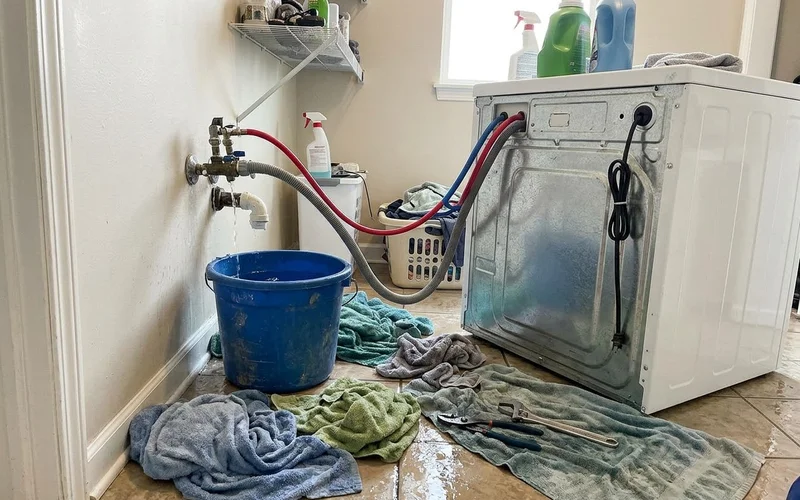
- Buckets under drips, towels along the edge of the water.
- Lift rugs, boxes, and electronics off the floor.
- Photograph and video everything before cleanup: the water, the broken pipe, and damaged items. Your insurer will want them.
- Open windows and run fans if it is not freezing outside.
- Do not cut into wet drywall yourself. The plumber needs to see the pipe first.
Minute 5: Make the call
When you call Sierra Vista Plumber Pros, an automated bilingual assistant answers and asks:
| Question | Example answer |
|---|---|
| Where is the water? | “Spraying from a pipe in the garage wall” |
| How long has it been running? | “About ten minutes” |
| Is the water off? | “Yes, I closed the main” |
| One fixture or the whole house? | “Whole house, the main is off” |
Mention whether the pipe froze overnight, what material it is if you know, and whether you have had other leaks recently. Several leaks in a year or two usually mean the whole pipe system is wearing out.
If you are away from the house
If a neighbor or property manager reports water at your house, ask them to close the main if they can reach it safely, then call from wherever you are. Give the assistant their name and number so the plumber can get access.
Request a free estimate when you call, and ask about any service call fee or after-hours rate before booking.