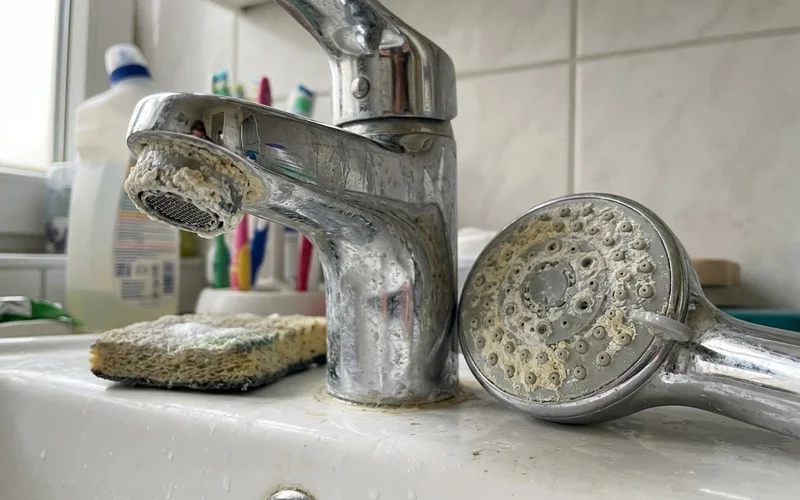
Spend a few months in a home here and you will start to see the evidence: a white ring on the shower head, spots on glasses straight out of the dishwasher, a faucet handle that feels a little gritty. Those are the visible signs. The expensive effects are happening inside the water heater, where nobody looks.
This guide covers where the water comes from, why there is no single hardness number for the city, how to get yours, and what to do with it.
Where the water comes from
Every home on a utility system in the area drinks groundwater. Arizona Water Company and Liberty Utilities, which operates as Bella Vista Water, pump from wells in the Sierra Vista Sub-Basin, part of the Upper San Pedro Basin. Some of those wells are hundreds of feet deep.
As groundwater moves slowly through rock and sediment, it picks up dissolved calcium and magnesium. That is what hardness is. Because each well draws from a slightly different place, the mineral content is not identical across town. Neither utility lists a hardness figure in its annual report, so the most accurate thing anyone can say is that the water runs moderately hard to hard, depending on the well.
How to read a hardness result
Since your number is unknown until you test, it helps to know the scale. Plumbers usually work in grains per gallon (gpg); lab reports often use milligrams per liter (mg/L). Divide mg/L by 17.1 to convert.
| Classification | Grains per gallon | mg/L |
|---|---|---|
| Soft | Under 1 | Under 17 |
| Slightly hard | 1 to 3.5 | 17 to 60 |
| Moderately hard | 3.5 to 7 | 60 to 120 |
| Hard | 7 to 10.5 | 120 to 180 |
| Very hard | Over 10.5 | Over 180 |
Test at your own tap
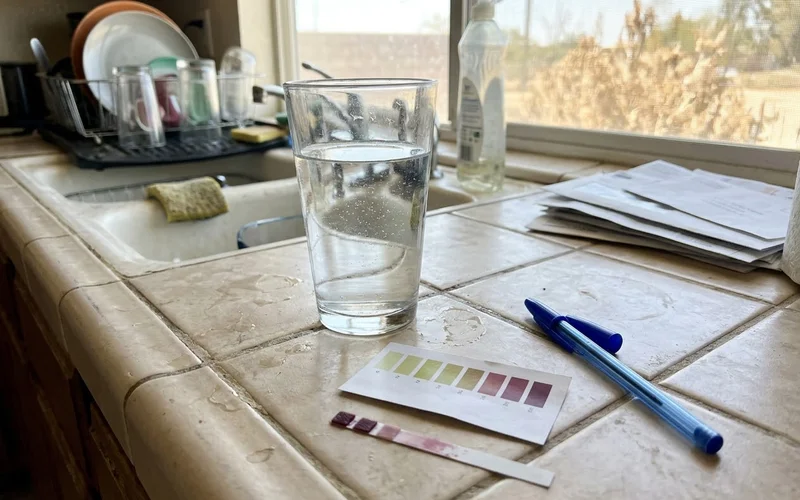
A hardware-store test strip gives a quick reading. Test cold water from the kitchen faucet, before any filter. If you are on a private well in Hereford or another outlying area, the reading may differ from town water, so test there too. The result is what sizes a softener correctly.
Where the minerals end up
Dissolved minerals stay in solution while water is cold and moving. Two things force them out:
- Heat. Warm water drops minerals as solid scale.
- Evaporation. Water that dries on a surface leaves its minerals behind.
So the damage concentrates in anything that heats water and anything that gets wet and dries.
The damage, most expensive first
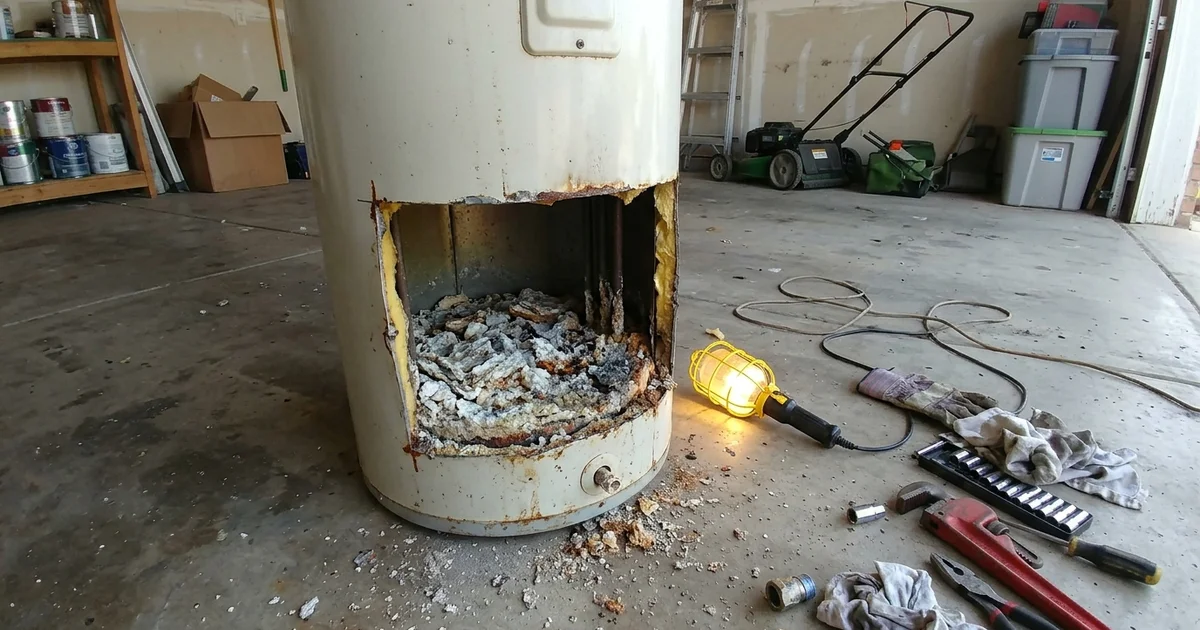
- Water heaters. Scale settles on the tank bottom, between the burner and the water. The steel overheats and corrodes, and the tank fails early. Popping and shorter hot showers are the early clues. See water heater repair.
- Tankless heat exchangers. The narrowest passages and the hottest surfaces in the house. They need descaling on a schedule.
- Shutoff valves. Valves that sit untouched for years stiffen as scale builds around the stem. Most people find out during a leak.
- Faucet cartridges and toilet parts. Ceramic discs, seats, flappers, and fill valves rely on smooth sealing surfaces that scale wears down.
- Appliances. Dishwasher and washer heating elements scale like a small water heater.
- Shower heads and aerators. Cheap to clean, but a reliable sign the rest is happening.
Why winter adds to it
At 4,600 feet, January nights regularly dip into the low 30s, and incoming groundwater is colder in winter. Heaters run longer to reach temperature, and longer heating means more scale per gallon. The cold also brings a separate risk: short overnight freezes can split exposed pipes and hose bibs, which is a different problem but often shows up in the same season.
Your options, from least to most protection
| Step | What it does | What it does not do |
|---|---|---|
| Clean aerators and shower heads | Restores flow at that fixture | Nothing for the heater or valves |
| Flush the water heater yearly | Clears loose sediment before it hardens | Does not stop new scale |
| Check the anode every 2 to 3 years | Protects the tank from corrosion | Does not address scale |
| Descale tankless units on a schedule | Keeps the exchanger clear | Needs repeating |
| Salt-free conditioner | Reduces how much scale sticks | Does not remove hardness |
| Whole-home softener | Removes hardness before it reaches anything | Does not purify drinking water |
| Reverse osmosis at one tap | Better drinking and cooking water | Does not protect the rest of the house |
Whether a softener makes sense depends on your test result and how long you plan to stay. Our page on water softeners and reverse osmosis explains how sizing works once you have a number.
The bottom line
You cannot change what comes out of the well, but you can change how much damage it does. If you are seeing crust on fixtures or hearing the water heater pop, Sierra Vista Plumber Pros answers any hour, in English or Spanish, and routes the details to a local plumber. Request a free estimate and ask about any service call fee before booking.