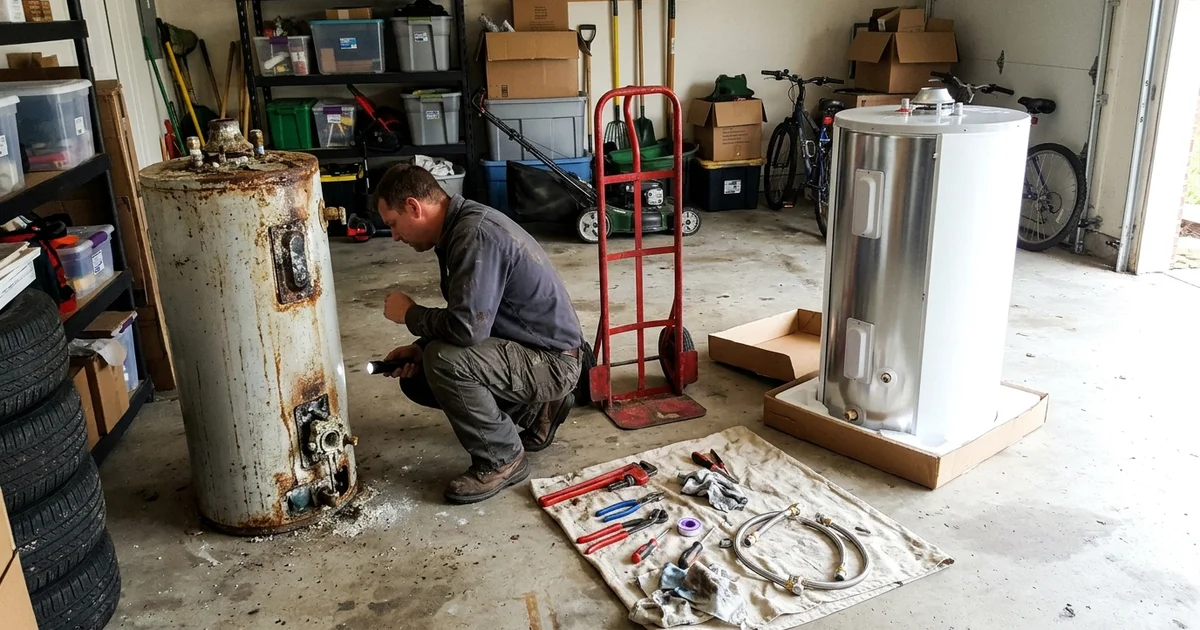
A heater that acts up raises one question: fix it, or replace it? Most of the time the answer comes down to a single distinction. The tank is the one part of a water heater that cannot be repaired. Everything bolted to it can.
Repair vs replace at a glance
| Repair makes sense | Replacement makes sense | |
|---|---|---|
| What failed | A component: thermostat, element, thermocouple, gas control, dip tube, relief valve | The tank: leak at the shell or seam, internal rust |
| Hot water color | Clear | Rusty from the hot side only |
| Sediment | Drains out with a flush | Drain valve clogs, scale will not move |
| Repair history | First problem in years | Two or more real repairs in a year |
| Age vs rated life | Comfortably younger | At or beyond it, especially without maintenance |
| Your plans | Staying put, tank is sound | You want a different type or size anyway |
If your situation sits mostly in one column, you already have your answer. The rest of this guide is for the cases that straddle both.
The symptom lookup
| What you notice | Usual verdict |
|---|---|
| Gas unit, no hot water, no leak | Repair: pilot, thermocouple, or gas control |
| Electric unit, no hot water, no leak | Repair: element, thermostat, or high-limit |
| Water too hot or not hot enough | Repair: thermostat |
| Runs out fast on a younger tank | Repair: dip tube, or flush the sediment |
| Relief valve dripping | Repair: valve or pressure; possibly an expansion tank |
| Popping with no other symptoms | Flush, then reassess |
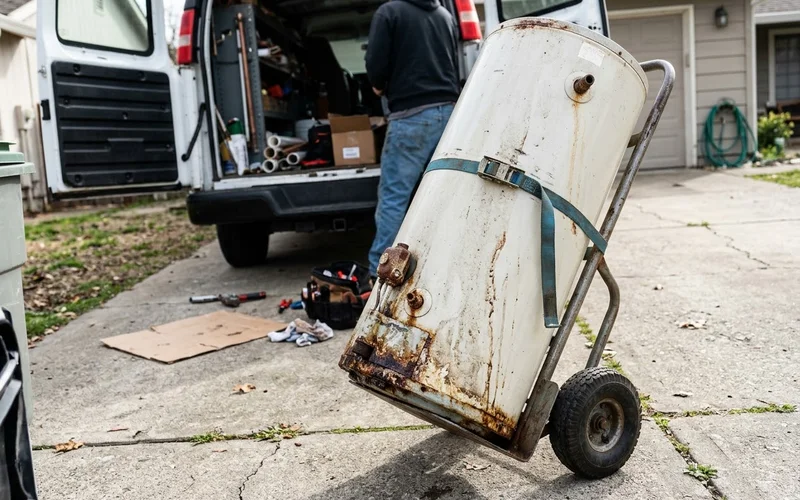
| Rust in hot water on an older tank | Replace soon |
| Water from the tank body | Replace |
The half-cost rule, adjusted for well water
A familiar rule of thumb says that when a repair approaches half the cost of a new installed heater, you should replace instead. It is a fair starting point. Two adjustments make it more honest for homes on hard well water.
Judge remaining life, not age. A repair on a tank with years ahead is an investment. The same repair on a tank near its end is just a deposit on the replacement you are about to need.
Discount the label for hardness. Water in the Sierra Vista area runs moderately hard to hard depending on the well. Unless the tank has been flushed and the anode checked on a schedule, assume it has less life than the sticker suggests.
Planned beats emergency
A planned replacement happens on a weekday, with the model you picked. An emergency one happens after the tank has emptied across the garage, often on a cold weekend, with whatever is in stock. When a tank is clearly near the end, choosing the date yourself is worth a lot.
What a fair inspection covers
Before anyone recommends either path, expect them to look at:
- Age, from the data plate.
- Sediment, by draining a little water and seeing what comes out.
- The anode, where it can be reached, to judge how protected the steel has been.
- Corrosion at fittings, the relief valve, and the bottom seam.
- House pressure and whether an expansion tank is needed.
- Venting and combustion air on gas units, including whether the unit is set up for this elevation.
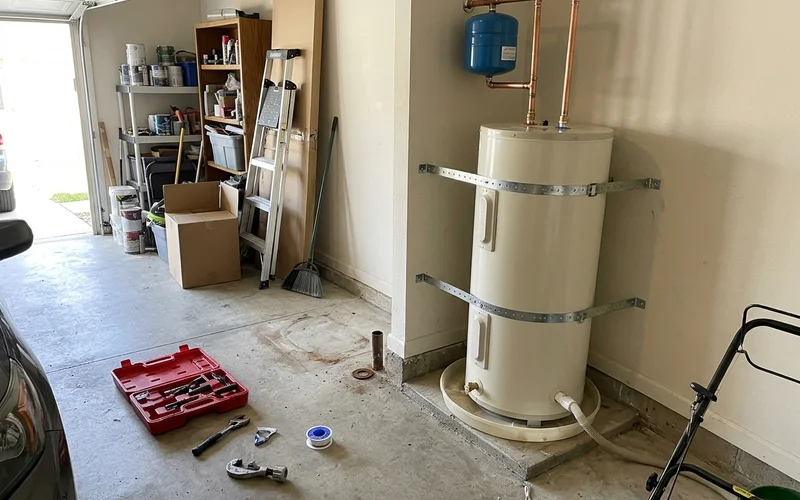
- The original install: connections, drain pan, and strapping.
You should hear both options and the reasons for each. A recommendation without reasons is a sales pitch.
If you land on replacement
- Pick the type. Tank and tankless wear out in different ways on hard water. Our guide on tank vs tankless compares them.
- Fix the cause. If scale killed the old heater, the new one starts the same clock on the same water. A softener, or a strict flush and anode routine, is what gets it to its rated life.
- Ask about the permit. Confirm whether one applies and whether it is in the estimate.
- Think about location. A heater in an unheated garage or closet on an exterior wall should have its supply lines protected from the short hard freezes that hit at this elevation.
Get a straight answer
Our water heater repair and replacement service covers gas, electric, and tankless units. Call Sierra Vista Plumber Pros at any hour, in English or Spanish, and give the assistant the heater’s age, fuel type, and what it is doing. A local plumber gets those details before arriving. Request a free estimate, and ask about any service call fee before you book.