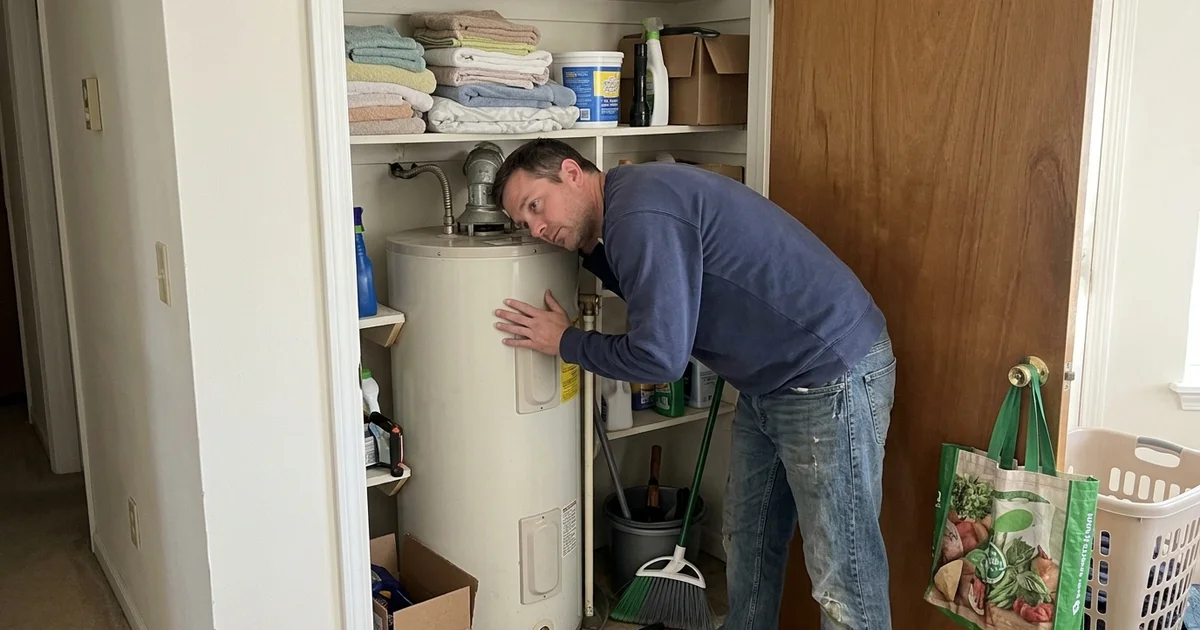
It can sound like popcorn, a percolator, or gravel shifting around in the garage. It starts when the burner lights and fades when it shuts off. That sound is almost always scale, and on hard well water it can start earlier in a heater’s life than most people expect. Not every noise means the same thing, though, so start by matching what you hear.
Sound by sound
| What you hear | When | Most likely cause | What to do |
|---|---|---|---|
| Popping, crackling | While heating | Water trapped under scale flashing to steam | Schedule a flush |
| Deep rumble | During long heat cycles | Thick or hardened sediment shifting | Schedule soon |
| Hiss or sizzle on a gas unit | While the burner runs | Water dripping onto the burner, from condensation or a leak | Check for moisture today |
| Whistle or hiss at the relief valve | Any time | Valve releasing pressure or temperature | Call promptly |
| Screech or squeal | While water is running | Partly closed valve restricting flow | Check the inlet valve is fully open |
| Ticking | As pipes warm and cool | Normal expansion | Usually nothing |
| Hum on an electric unit | While heating | Element vibration | Usually minor |
Sediment popping has a recognizable pattern: irregular, percussive, and only while the heater is actively firing.
Why tanks here get noisy early
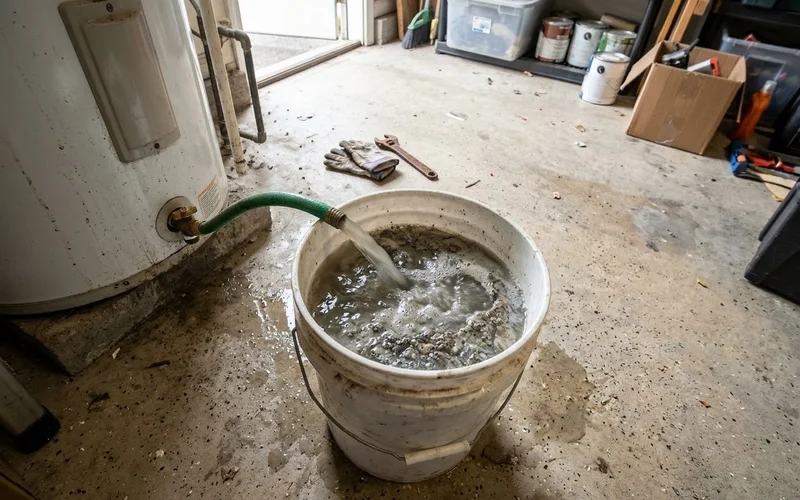
Water across the Sierra Vista area is groundwater from deep wells, moderately hard to hard depending on which well supplies your street. Each heat cycle drops some of that calcium and magnesium onto the tank bottom. Over months the loose layer bakes into a crust, and once water can get trapped beneath it, the popping starts.
Winter speeds things up. On a 30-degree January night, the water entering the tank is colder, so the burner runs longer to recover after showers and laundry. A tank that is quiet in September can be noisy by February for exactly that reason. For the full picture of how hardness shortens tank life, see why water heaters wear out early on well water.
What the noise is costing you
- Overheated steel. Scale insulates the tank bottom from the water, so heat builds up in the metal instead.
- Faster corrosion. Hot steel corrodes faster, from the inside where nobody sees it.
- Higher bills. Longer burns to heat the same water.
- Shorter showers. Sediment takes up room and slows recovery.
Where it ends
A noisy heater that is ignored does not stay a noisy heater. It becomes a leaking one, usually at the bottom seam, and usually onto a garage floor with boxes stacked nearby.
Flush, wait, or replace
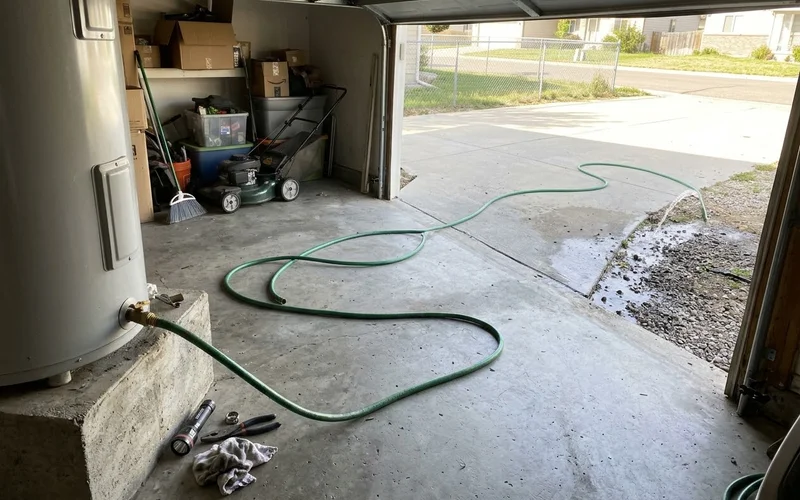
A flush is likely to help when the heater is fairly young, the noise is recent, the hot water runs clear, and the base is dry. Draining loose sediment before it hardens often quiets the tank and restores recovery.
A flush helps less on a tank that has gone many years without service. Hardened scale may not pass through the drain valve, and the valve itself can clog. It is still worth trying, but expect a partial result.
Start planning a replacement when the heater is past its rated life, the hot water runs rusty, the drain valve is packed solid with mineral, or there is moisture at the base.
While the tank is drained is the ideal time to pull the anode rod. A spent rod means the steel is unprotected, and a new rod on a tank with life left is inexpensive protection.
A routine that keeps it quiet
| Task | How often |
|---|---|
| Flush the tank | Every year |
| Check the anode rod | Every 2 to 3 years, sooner on harder water |
| Test hardness at the tap | Once, to decide on a softener |
| Check the relief valve | Yearly, during the flush |
Our water heater repair service handles flushing and anode checks on one visit. Call Sierra Vista Plumber Pros any hour, in English or Spanish, request a free estimate, and ask about any service call fee before booking.