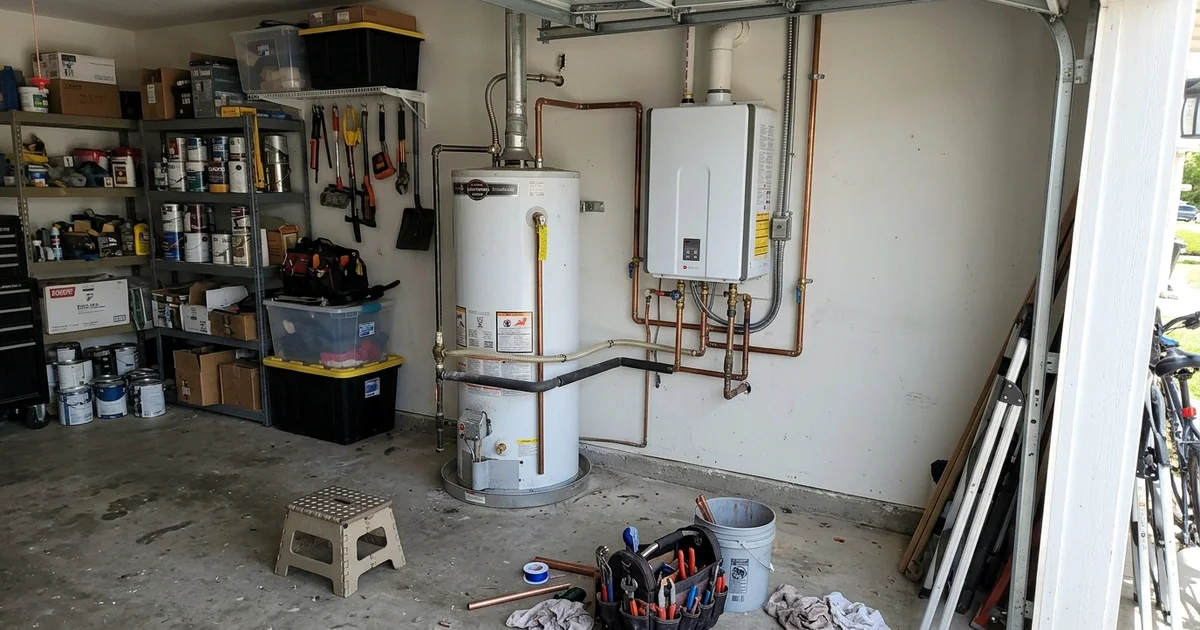
Most tank-versus-tankless comparisons stop at upfront price and endless hot water. In Sierra Vista and this part of Cochise County, two more things belong in the decision: hard well water, which changes how each heater wears out, and cold winter nights at 4,600 feet, which change how a tankless unit performs and how it needs to be protected.
How each one wears out
Tank heaters collect sediment on the bottom. The layer insulates the burner, the steel runs hotter than designed, and eventually the tank corrodes through. It is a slow decline that yearly flushing and anode checks keep in check, and it forgives the occasional late service.
Tankless heaters push water through a narrow heat exchanger and heat it in seconds. Scale forms inside those passages. Efficiency drops, temperatures swing, error codes appear, and eventually the exchanger itself can fail. Skipped maintenance shows up quickly.
Side by side
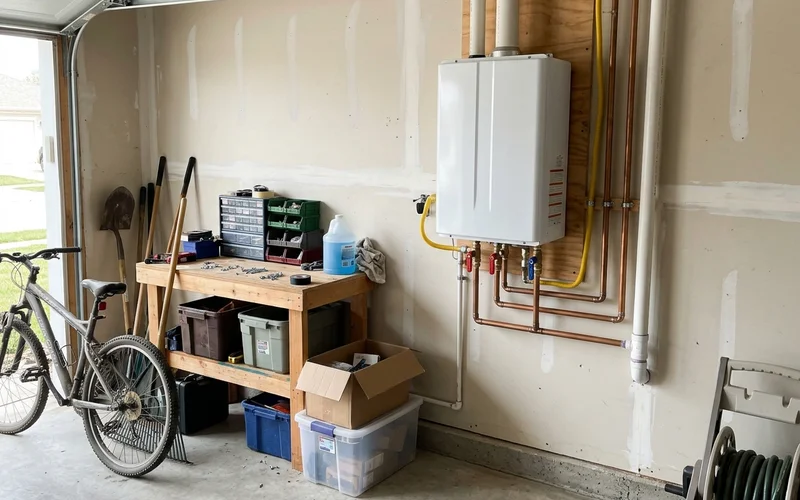
| Criteria | Tank | Tankless |
|---|---|---|
| Upfront equipment and install | Lower | Higher, more if the gas line or venting needs upgrading |
| Install on a swap | Usually straightforward | May need a larger gas line, new venting, and electrical work |
| Standby energy loss | Some, keeping the tank hot | Minimal |
| Hot water supply | Limited by tank size and recovery | Continuous at rated flow |
| Hard-water upkeep | Yearly flush, anode check every 2 to 3 years | Regular descaling, more often without a softener |
| Forgiving of missed upkeep | Fairly | Not very |
| Freeze exposure | Low inside the house | Real if mounted outdoors or in a cold garage |
| Typical failure | Leaking tank | Scaled heat exchanger, error codes |
| Space | Floor space | Wall-mounted |
Why January sets the tankless size
A tankless unit’s output depends on how many degrees it has to raise the water. At this elevation, groundwater coming into the house is noticeably colder in mid-winter than in summer, so the temperature rise is biggest exactly when everyone wants long hot showers. Size a tankless unit for the coldest month, not the average one, or two showers at once will run lukewarm in January.
The same cold has a second effect. A unit mounted on an exterior wall or in an unheated garage needs freeze protection. Many models protect themselves with small internal heaters, but only while they have power. Insulated lines and a plan for power outages matter here.
Elevation note for gas units
Gas appliances behave differently in thinner air. Whatever you choose, confirm the model is approved for use at this elevation and set up for it. That applies to tanks and tankless alike.
A decision checklist
Lean toward a tank if most of these fit:
- You want the simplest, most forgiving upkeep.
- One or two people live in the home.
- You may move on orders or sell within a few years.
- You need hot water back fast and the current setup is a direct swap.
- You are not planning a softener.
Lean toward tankless if most of these fit:
- Several people shower back to back.
- You plan to stay for many years.
- You already have a softener, or will add one.
- You will actually schedule descaling.
- The unit can go somewhere protected from freezing.
Sizing in one paragraph each
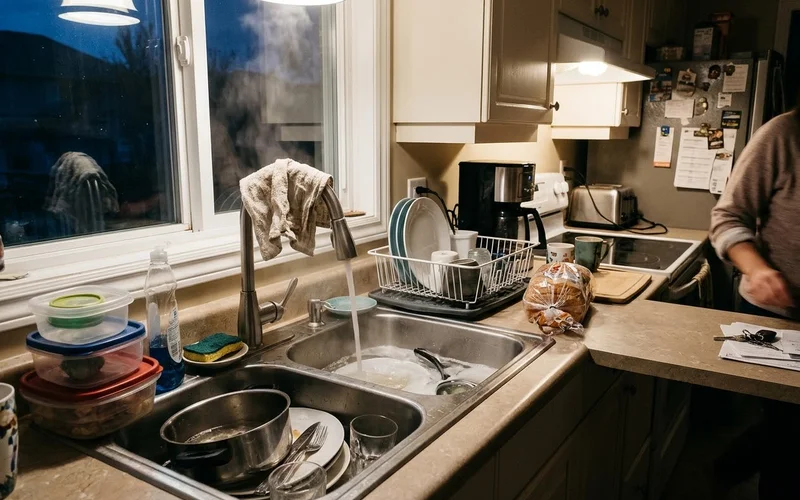
Tank: look at your busiest hour. Two showers and a dishwasher on a school morning set the demand, and tank size plus recovery rate must cover it. Oversizing means paying to keep water hot that nobody uses.
Tankless: add the flow rates of the fixtures likely to run at once, then match that to the unit’s output at your winter temperature rise. See our tankless descaling schedule for upkeep on hard water.
Before the visit
Ask whether a permit applies to your address, and whether gas line, venting, or electrical changes are included in the estimate. Our water heater repair and replacement service covers gas, electric, and tankless. Call Sierra Vista Plumber Pros any hour, in English or Spanish, request a free estimate, and ask about any service call fee before booking. Tell the assistant how many people live in the home and whether you have a softener so the plumber can talk through both options.