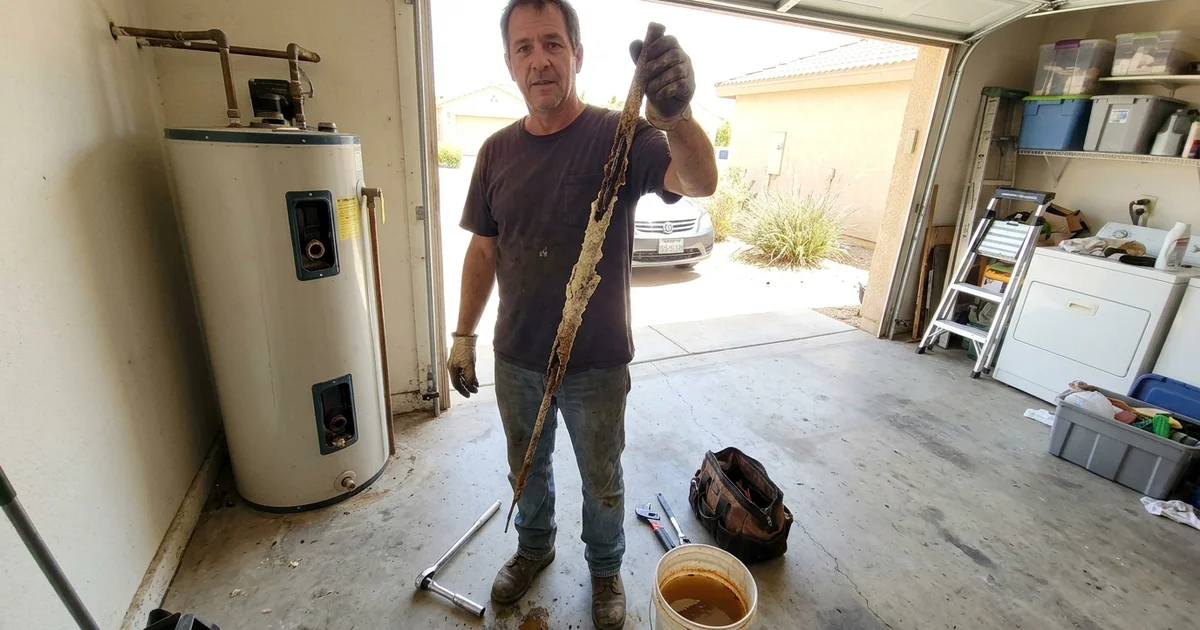
Every tank water heater has a part that decides how long it lives, and almost nobody knows it is there. It is a metal rod, three or four feet long, screwed into the top of the tank and hanging in the water. Its whole purpose is to be eaten away so the steel tank is not. When it is gone, the countdown on the tank begins.
This guide is for the moment you need to choose: put in a new rod, leave things alone, or stop spending on this heater and plan its replacement.
Start with these four questions
Answer them in order. The first “stop” answer ends the decision.
| Question | If yes | If no |
|---|---|---|
| Is water leaking from the tank shell or bottom seam? | Stop. No rod can fix a tank that has rusted through. Plan a replacement. | Go to the next question. |
| Does the hot water run rusty while the cold stays clear? | The rod is likely spent and the steel is corroding. A rod can slow it on a younger tank, but time is limited. | Go to the next question. |
| Is the heater younger than about two-thirds of its rated life? | A rod is usually money well spent. | The payoff gets thinner. Have the rod and the sediment looked at before deciding. |
| Has the tank been flushed in the past year or two? | Pair the rod check with the next flush. | Do both together. Heavy sediment changes the outlook. |
How the rod gets used up
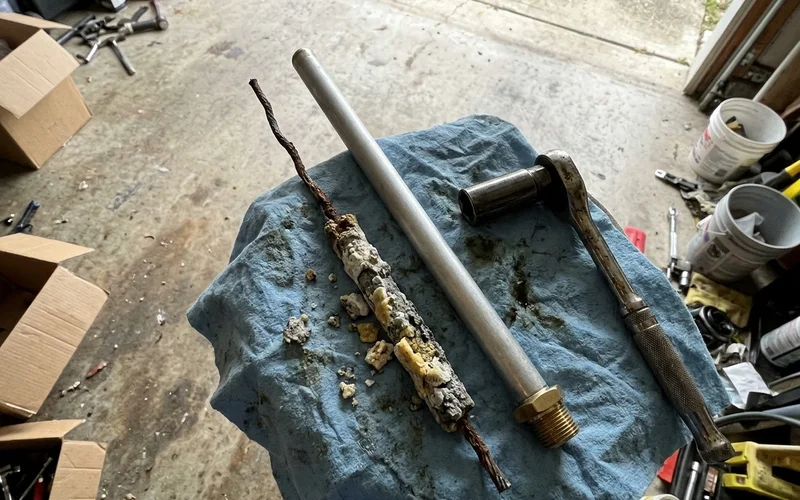
Glass-lined tanks are never sealed perfectly. Welds, fittings, and tiny gaps in the lining leave bare steel in contact with water, and that steel wants to rust. The rod, made of magnesium or aluminum, is more reactive than the steel, so the corrosion goes to the rod first.
It is a gradual process. The rod thins a little every month until only the steel core wire is left. Nothing on the outside of the heater changes when that happens. The first visible clue is often tinted hot water, and the last one is a puddle.
What well water changes
Tap water across the Sierra Vista area is groundwater pumped from deep wells, and it runs moderately hard to hard depending on which well serves your street. Harder water carries more dissolved minerals, which makes it more conductive, which speeds up the reaction that consumes the rod. It also drops scale on the tank bottom, so the heater fights on two fronts at once.
Because hardness varies, so does rod life. Two identical heaters a few miles apart can wear rods at noticeably different rates. That is why the first inspection matters more than any schedule printed in a manual. For the bigger picture, see our guide on why water heaters wear out early on well water.
Picking the replacement rod
| Rod type | Best fit | Trade-off |
|---|---|---|
| Magnesium | Softer water, or homes with a softener | Strongest protection, shortest life |
| Aluminum-zinc | Hard untreated water, rotten-egg smell on the hot side | Slightly milder protection, lasts longer |
| Powered (impressed current) | Owners who never want to check a rod again | Higher upfront cost, needs a nearby outlet |
If you have a softener, magnesium is usually fine, since softened water spares the tank from scale. On untreated well water, aluminum-zinc is the common practical choice.
Why it is rarely a quick DIY job
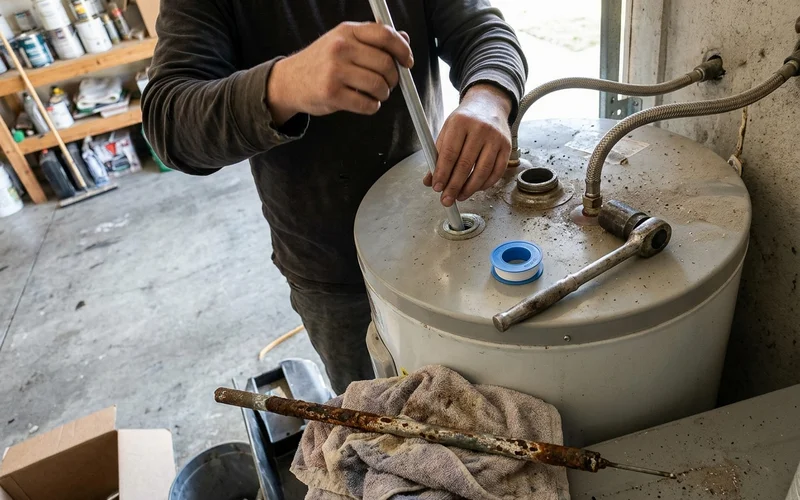
The rod has to come out to be inspected. That means shutting off gas or power, closing the cold inlet, draining some water, and breaking loose a hex head that has been sitting under heat and minerals for years. Seized rods are normal, and putting a long breaker bar on a tank can twist fittings or damage the connections on top.
Low ceiling, tight closet?
A rigid rod often cannot come straight out of a heater tucked under a shelf or a low garage ceiling. Segmented, flexible rods are made for exactly this. Mention the clearance when you call.
Rod or new tank: the reasoning
You do not need exact numbers to see the logic. A rod is an inexpensive part, and checking it adds little time to a tank flush that should happen anyway. A new heater is a much larger expense, plus disposal, plus any permit your address requires, plus cleanup if the old one failed on the floor. If a rod buys a healthy tank a few more years, it pays for itself.
Request a free estimate that covers the flush and rod check in one visit, and ask about any service call fee before you book. When you reach Sierra Vista Plumber Pros, the bilingual assistant notes the heater’s age and fuel type so the plumber can bring a rod that fits. Both services are part of our water heater service.