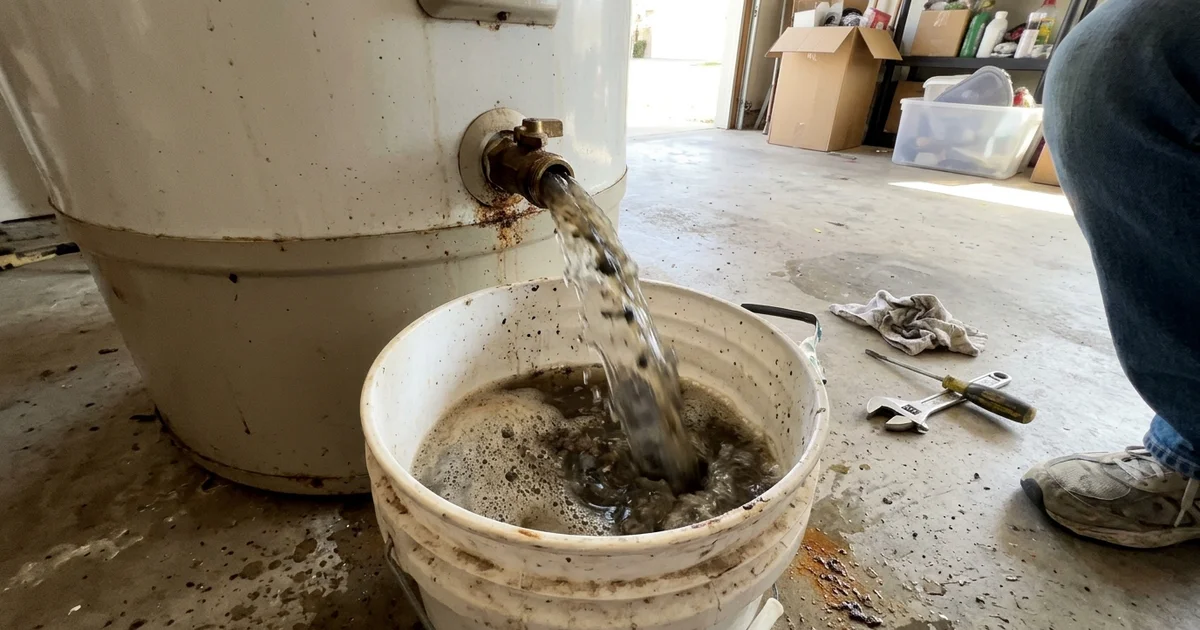
A water heater that starts leaking well before its label says it should is not usually bad luck or a bad brand. On hard groundwater, early failure follows a predictable chain, and once you understand the links, you can break most of them.
The main cause: scale from hard well water
Every home in the area runs on groundwater pumped from deep wells in the Sierra Vista Sub-Basin. Neither major utility publishes a single hardness figure, and the real number depends on the well. What is consistent is that the water runs moderately hard to hard. That is enough to wear a tank down faster than average if nothing is done about it.
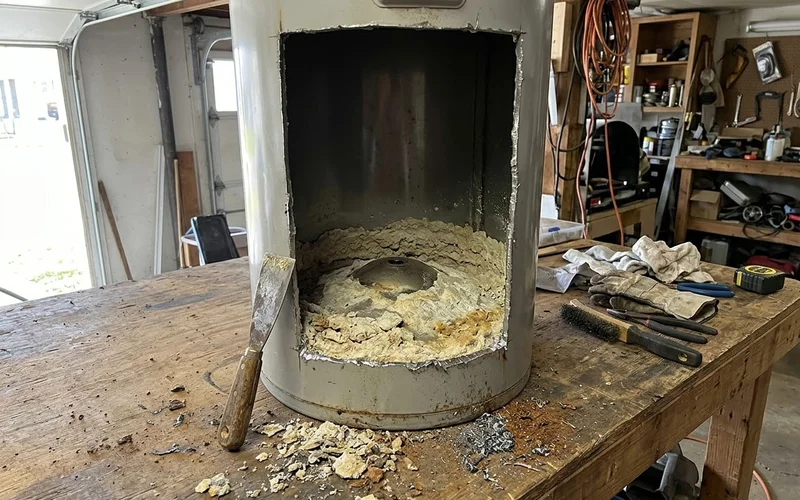
Here is the chain inside the tank:
- Heat pushes minerals out. Calcium and magnesium leave the water and settle on the tank bottom, right over the burner or around the lower element.
- Loose sediment hardens. Over months it bakes into a crust.
- The burner heats scale, not water. Heat builds up in the steel instead of passing into the tank.
- Burn times lengthen. Recovery slows, showers get shorter, and the bill creeps up.
- The steel corrodes faster. Overheated metal rusts quickly from the inside, especially once the anode rod is spent.
- The tank leaks, usually at the bottom seam, often with little warning.
The second factor: cold winter water
At 4,600 feet, January nights average around 30 to 34 degrees, and groundwater entering the house is colder in mid-winter than in summer. Colder water means longer burner runs on every cycle, and longer runs over a layer of scale mean more heat stress on the tank bottom. It is no coincidence that many weak heaters finally fail in the middle of winter.
A heater in an unheated garage or a closet on an outside wall has another exposure: the supply lines and relief valve piping around it can freeze on the coldest nights if they are not insulated.
The third factor: homes that sit empty
Sierra Vista sees steady turnover, with military families moving on and off orders and rentals changing hands. Heaters in homes that sit empty between occupants have their own wear pattern.
| What happens while the house is vacant | Effect on the heater |
|---|---|
| Left on at normal setting | Keeps a full tank hot for nobody, cycling all day |
| Shut off with the tank full | Water sits still; sediment settles and crusts, drain valve can stick |
| Set to vacation mode | Best option: low heat, little cycling |
Whichever happened, flush the tank and check the base for moisture when the home is occupied again.
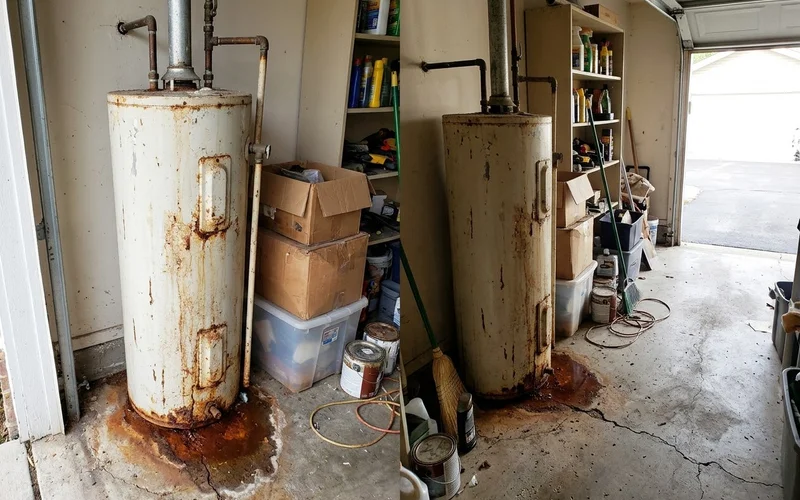
Warning signs, in the order they usually appear
- Popping or rumbling while heating. See water heater popping and rumbling sounds.
- Hot water running out sooner. Rule out a broken dip tube too.
- A rising gas or electric bill with no change in use.
- Rust in the hot water only, a sign the anode is spent.
- Moisture at the base. Sometimes a fitting or relief valve, which can be repaired. Sometimes the tank, which cannot.
What rated life assumes
The years on the label assume average water and routine maintenance. Neither is automatic on hard groundwater. Without flushing, the clock simply runs faster.
Three habits that close the gap
| Habit | How often | Why it works |
|---|---|---|
| Flush the tank | Yearly | Removes sediment before it hardens |
| Check the anode rod | Every 2 to 3 years | A spent rod leaves the steel unprotected |
| Test and treat the water | Test once, treat ongoing | A softener removes hardness before it reaches the tank |
Tankless owners need their own version: descaling on a schedule set by your actual water, not the national manual.
When a heater does need replacing, size it to the household. An undersized tank cycles harder and scales faster. Ask whether a permit applies at your address and whether it is in the estimate.
Where to start
Our water heater repair and replacement service covers flushes, anode service, repairs, and replacement. For the root cause, see water softeners and reverse osmosis. Call Sierra Vista Plumber Pros at any hour, in English or Spanish, request a free estimate, and ask about any service call fee before booking.